… and why we teach companion rescue so much better than we teach saying no.
Most avalanche educators agree that human factors matter. Ask them how they know their teaching works, and the room may go silent. I think the problem isn’t a missing test but a missing outcome, and that aviation and surgery have already shown a way forward.
Part 3 of 3 on ‘safety’ in avalanche terrain.
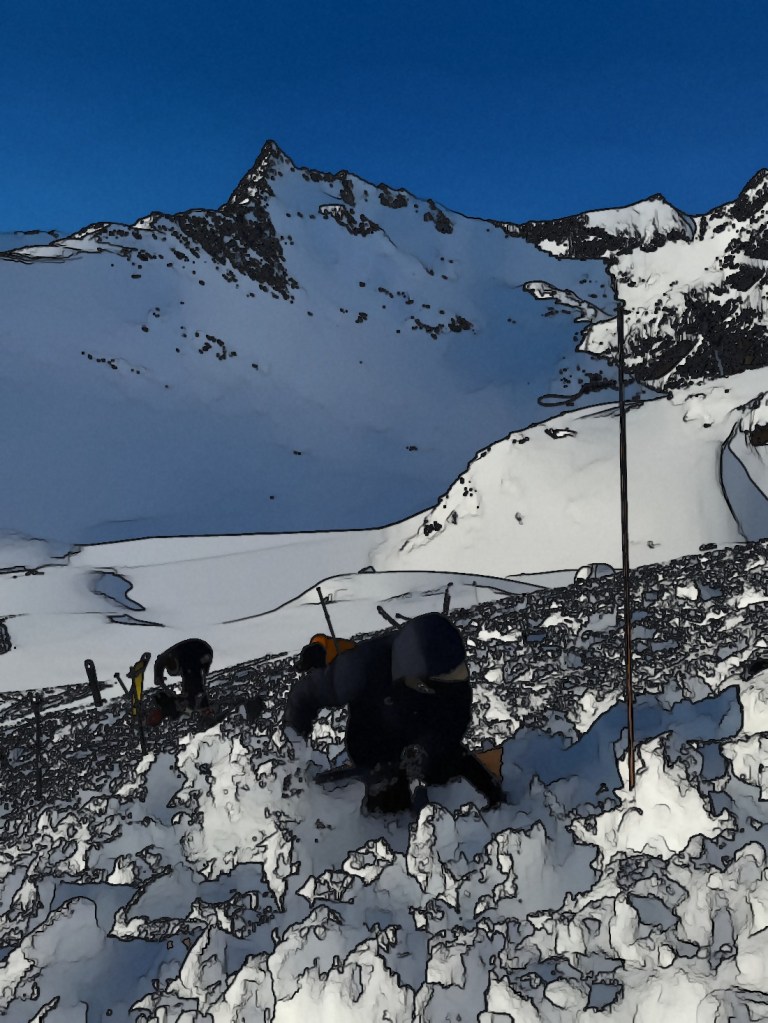
Performing companion rescue has a clear, observable and timed outcome. How we manage. the human factor doesn’t, yet.
An avalanche course can teach you how – and how fast – you should be able to find a buried transceiver. Most courses do not teach you how and when you should speak up.
Picture a touring partner who felt a whoomph on the way up and said nothing, because everyone else seemed so sure. Which skill was missing that day? Not the beacon search, and not the snow pit. What was missing is the kind of skill that aviation and surgery call non-technical, and that avalanche education still struggles to name, teach and assess.
Everyone’s priority, nobody’s curriculum
At ISSW 2024 in Tromsø my colleagues ran a workshop with 45 avalanche educators, guides and researchers from nine countries, and presented the results at ISSW 2026 in Whistler (Fjellaksel et al., 2026). The level of agreement among the workshop participants was striking. Educators trained in different systems converged on the same approach: create the experience, make it authentic and personal, make the group dynamics visible, hand over the decision, then debrief. They agreed just as firmly that presenting biases as a list in a classroom doesn’t work. But when we asked how they knew their approach worked, one group summed up its whole discussion in a single line:
“How do you know it works? … We […] have no idea.”
We argue that’s not a failure of the educators. but that educators and curricula are missing a clear outcome. Companion rescue has one: find the buried transceiver within a set time. That’s why it can be taught, practiced and certified. Human factors outcomes, where they’re stated at all, are written as awareness, and awareness is an internal state that is bloody hard to observe in the field. Add to that a topic that tends to arrive last in a course, gets squeezed by time, and, as one educator put it, the fact that “we don’t teach our teachers how to communicate.”
Non-technical skills are safety skills
What I keep circling around is what aviation and surgery call non-technical skills: situation awareness, decision-making, communication, teamwork and leadership (Flin, O’Connor & Crichton, Safety at the Sharp End, 2008). The label is a bit unfortunate, because ‘non-technical’ sounds a lot like ‘optional’ or ‘non-essential’. In cockpits and operating rooms, these skills are trained and assessed as safety skills, right alongside flying the plane or holding the scalpel. Framed this way, human factors stop being a list of errors to avoid, and become skills to build. Recreational avalanche education hasn’t quite made that move yet.
And they’re not only for pilots and surgeons. In the first study of the non-technical skills used by mountain guides, Irwin and colleagues (2023) interviewed 18 British IFMGA guides about recent adverse events and tough calls in the mountains. They found six skill categories: situation awareness, decision-making, task management, cognitive readiness, teamwork and communication, and leadership. Some of the elements had never shown up in non-technical skills research before, such as managing client expectations and adapting how you communicate to the situation. From our colleagues’ research observing what guides actually do, we know they are some of the most important skills for professional guides (Løland & Hällgren, 2022).
Two of Irwin and colleagues’ findings jump out in light of this post. Under teamwork and communication, the guides described sharing concerns, including the plain assertiveness of speaking up when you notice a problem. And under leadership, they described developing psychological safety: listening, making decisions together, and encouraging clients to ask questions and speak up. One guide put it as setting “a tone, where everybody’s got a voice.” In other words, people who manage mountain risk for a living already treat psychological safety as part of the job.
The guides were just as clear about what erodes these skills: fatigue, rushing, pressure from paying clients, and simply making assumptions. One admitted he hadn’t looked closely enough at the terrain, assuming it would be fine “because everyone says it is safe.” That’s our quiet touring partner’s day, told from the other side of the group. And yet, as the authors note, there was no recognized non-technical skills training tied to guide accreditation. Let that sink in for a second; no skills training of safety relevant skills in the professional guide training program.
Aviation’s answer to this problem was behavioral markers: observable actions that show a skill is present. Irwin and colleagues describe their guide study as a first step toward such a system. In our ISSW paper we suggest a first, untested set for avalanche courses. One reads: states a concern, and the condition that would change their own mind, before the group commits to a slope. Another: notices when the group is deferring to one person, and speaks up.Look at that second one again. It describes exactly the moment our quiet touring partner faced.
But what if speaking up isn’t only a skill of an individual?
Here’s where Reimer’s work changes the picture. She and her colleagues interviewed mountain guides and avalanche professionals from groups that rarely get heard in the profession: women, 2SLGBTQ+, BIPOC and survivors of workplace trauma (Reimer & Eriksen, 2025; Reimer, Eriksen & Warren, 2026). Participants described speaking up as something that comes at a cost: they rationed their objections, and some routed concerns through male colleagues just to be taken seriously. Speaking up is a skill, yes. But whether someone actually voices a concern also depends on whether the group makes it safe to do so.
A learner who stays silent may not lack the skill at all; they may simply be reading the room correctly. So, an outcome like voices a concern measures the person and the group at the same time. Reimer’s findings suggest that noting how the group responds to whoever proposes a change of plan should be the rule, not the exception.
And it points straight back at us as instructors and teachers. Building a group where concerns are welcome is itself a non-technical skill, and one that avalanche instructor training rarely teaches. Reimer and colleagues also frame their participants’ hard-won strategies for getting heard as risk management expertise in its own right. It’s telling that all 18 guides in Irwin and colleagues’ study were men. That’s no fault of the study, which recruited from a profession that remains overwhelmingly male even if the skills that are needed are not. But it’s a reminder that the people for whom speaking up costs the most are rarely the ones describing what the skill looks like. Maybe the people who have had to work hardest at these skills are the ones we have the most to learn from?
A caveat
I don’t want to swap one oversimplification for another. Borrowing from aviation and surgery needs care: non-technical skills frameworks were built for professional crews with defined roles and a captain. A group of friends on a ski tour has neither, and the behavioral markers we propose are illustrations, not validated tools. And none of this makes snow knowledge and mountain expertise less important. Speaking up only helps if someone has noticed something worth saying.
What this means in practice
For instructors, the first move is to be a role model and to go first. Reimer’s participants said vulnerability has to be seen in someone else before it feels possible to show, and that someone should be the instructor, saying out loud what they’re unsure about. Decide before each field day which two or three behaviors you want to see in yourself and in your course participants, then hand over the lead and watch for them. Make dissent a role: an assigned devil’s advocate turns speaking up from a personal risk into a responsibility. Reward the concern, not only the correct call; a worry that turns out to be unfounded is still the behavior we want. Debrief how the decision was made and who shaped it, not just whether it was right. Then teach that debrief as a habit learners take home and with them onto their next tour.
For researchers and course providers, the job is to state human factors outcomes as things learners can be seen doing, not as awareness. As behavior that can be practiced and improved … deliberately. We need to test whether behavioral markers for non-technical skills can be observed reliably, including markers of how the group responds, not only of what individuals do. And instructor training needs room for facilitation, not just technical skills.
For all of us as touring buddies, practice adaptive decision-making and changing plans on a good day, so the muscle is there when you need it.
One final thought
Within a generation, companion rescue went from vague advice to a specified, practiced and timed skill, and teaching got better because it could finally be measured against something. Speaking up could follow the same path. Until then, the simplest test of a group’s non-technical skills is a question anyone can ask before dropping in: is it safe to say no?
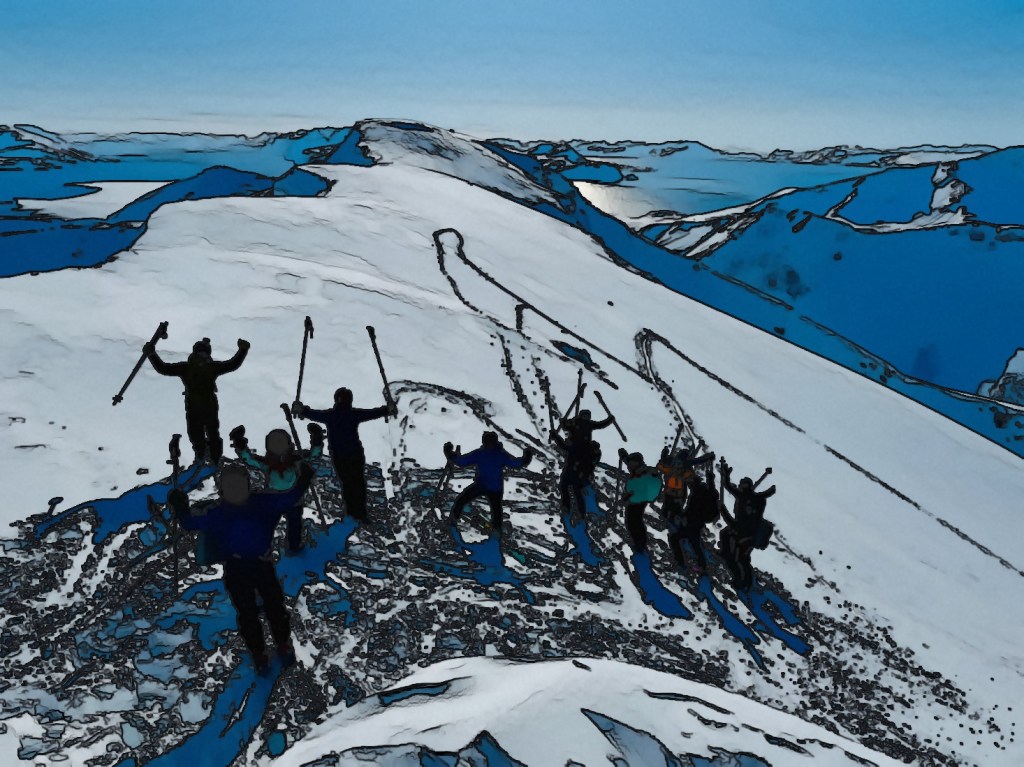
Safe enough, together.
Thanks to Tove Irene Dahl and Tarjei Westerlund for sharp and generous feedback, and to the inspiring people I met at ISSW in Whistler, whose conversations planted many of the ideas in this series.

