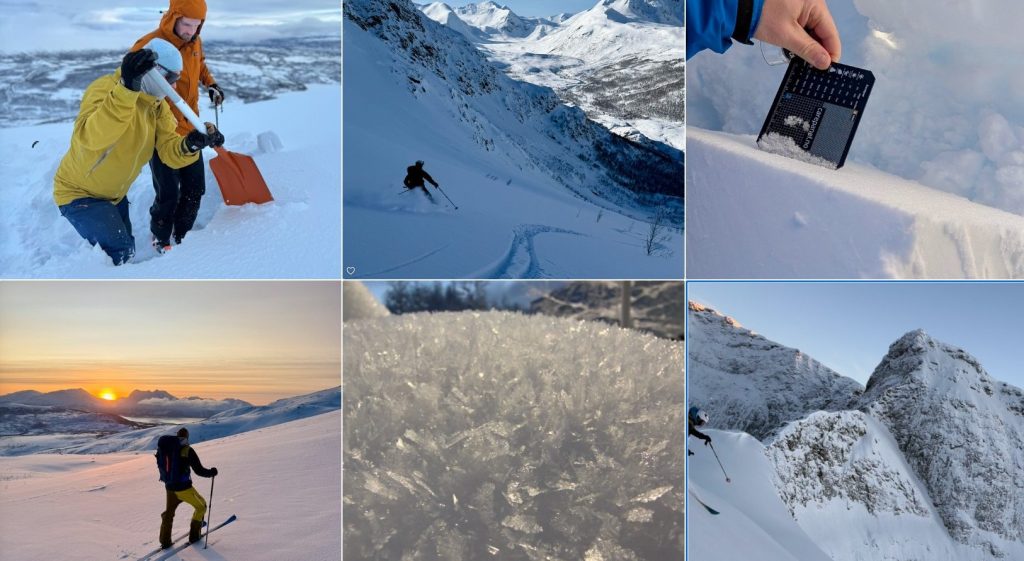
Author: Tim Dassler

  • Why is it safe to go? And is it safe to say no?

    … and why safety in avalanche terrain is about more than not getting caught.

    In the avalanche world, ‘safe’ usually means one thing: not caught, not buried, not killed. What if this understanding is too narrow? What if safety is also about being safe to speak, and safe to learn?

    Part 1 of 3 on ‘safety’ in avalanche terrain.
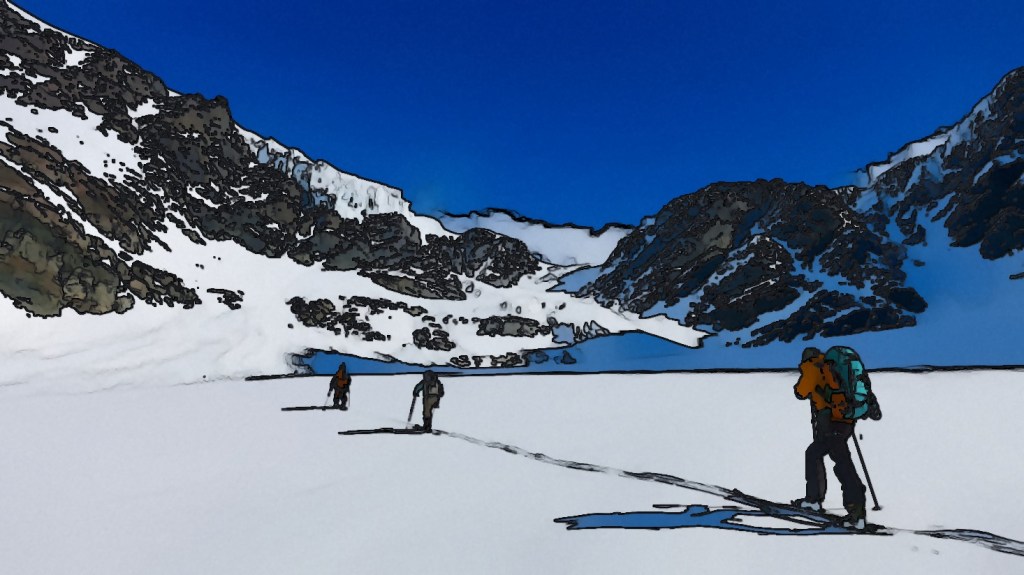
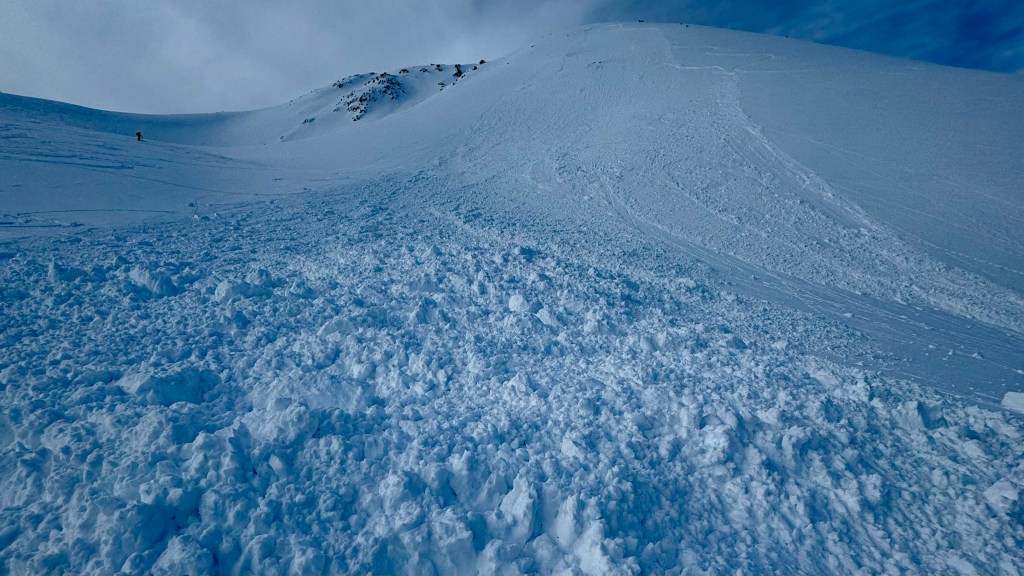
    Bluebird day. The most difficult hazards to manage may not be in the snow.

    Bluebird day, two days after a storm. Five of us skin up towards a northeast-facing bowl we’ve all skied before. Halfway up, the snow settles under Magnus’ skis with a soft whoomph. He stops for a second and looks around. Nobody else seems to have noticed. Or if they have, nobody says anything. The two strongest skiers in the group are already talking lines.

    At the top, we dig a quick pit. The tests look okay-ish. “Looks good,” someone says. “Same as last week.” Magnus is the newest in our group. He pulls his goggles down and doesn’t say a word. We drop in, one at a time: cold, deep, perfect snow. Whoops and high-fives at the bottom.
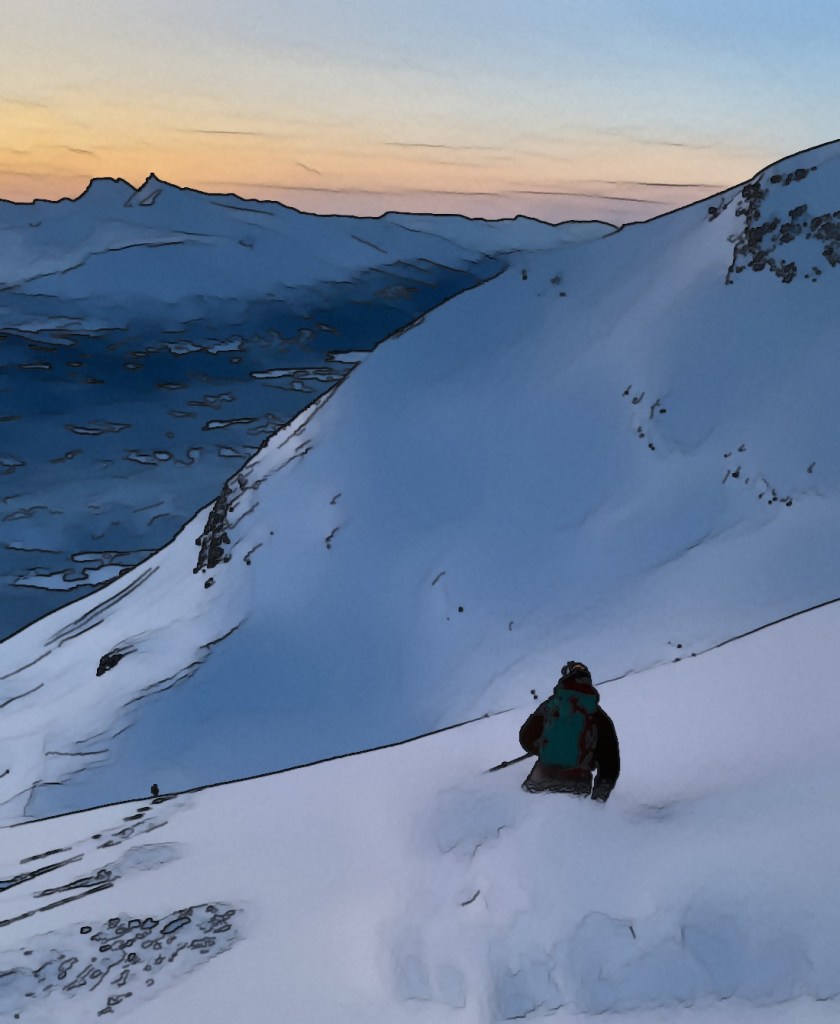
    One at a time: cold, deep, perfect snow. High-fives at the bottom.

    It’s only in the car on the way home that he brings it up. “Did anyone else feel that whoomph on the way up?” Silence. Then: “Why didn’t you say anything?” He shrugs. “Everyone seemed so sure. And I didn’t want to be the one who ruined the day.”

    Was it safe? We skied the slope and nothing happened, so in the narrow sense: yes. But one person in the group had information that could have changed the decision, and the group gave him no easy way to share it. And the most important learning moment of the day almost didn’t happen either. It came in the car, more by chance, two hours too late.

    That story is a composite, stitched together from tours I’ve been on and stories touring partners have told me. But I suspect you’ve been on a version of it, too. Maybe as Magnus, maybe as one of the people talking lines.

    Most of what we teach and research in avalanche safety is about the first half of that story: the pit, the tests, the snow. Very little is about the second half: the whoomph nobody mentioned, and whether there was room for it in the group.

    Those who have read the blog know I have a soft spot for one question: why is it safe enough? In my last post I argued that since the mountain doesn’t always answer back, the honest feedback has to come from our peers. This post asks the uncomfortable follow-up: what if our peers don’t feel safe enough to give it?

    My short answer: we need a wider understanding of safety and risk, one that includes the people on the slope, not just the snow under their skis.

    A useful question

    This autumn we published a study (Dassler, Fjellaksel & Pfuhl, 2026) in which we followed ten skiers through a season-long avalanche course. After each tour, we asked them about the most critical slope of the day: why did you decide it was safe to go? We then scored their answers against the Systematic Snow-Cover Analysis. Did they identify the weak layer? Did they assess whether a crack would start and spread? Did they connect what they found in the pit to the slope they wanted to ski?

    The question worked. Better than we’d hoped, actually. On a scale from 0 to 1, the average score jumped from 0.25 at baseline to 0.85 after the core modules. A year later, it had fallen right back to 0.25. Sobering, if you believe a single course, or a whole season of learning, does the job.

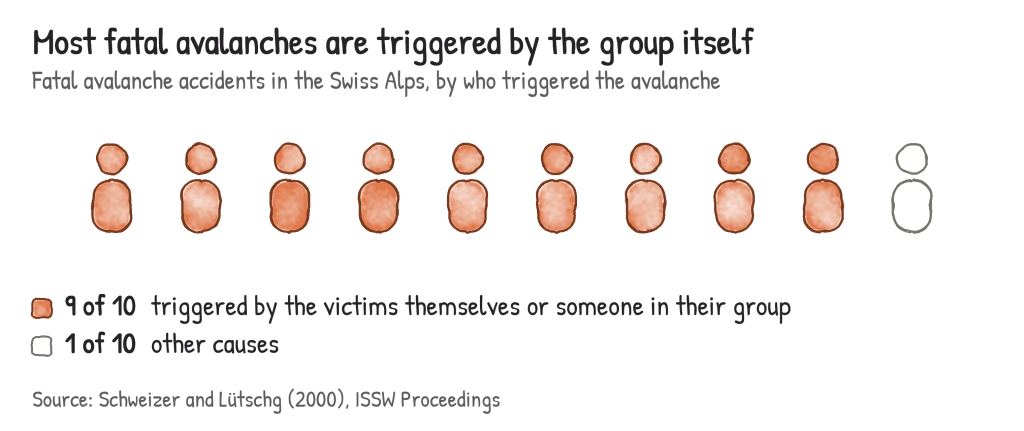
    I still think it’s a useful question to ask: of your touring partners, of yourself, or, if you’re an avalanche instructor, of your course participants. But framing safety as something that’s only about the snow can pull our attention away from what may matter most. In about nine out of ten fatal avalanche accidents the avalanche is triggered by the victims themselves or by someone in their own group (Schweizer & Lütschg, 2000). And again and again, I hear the same story afterwards: someone had a bad feeling, noticed a warning sign or felt uncomfortable, but didn’t say so. And then the avalanche hit.

    Rachel Reimer’s work helped me see what our question, and the way we framed it, couldn’t.
    What our scoring couldn’t see

    Here are two of the answers we got:

    “… Most importantly, members of the group—some of whom were familiar with the specific slope—expressed confidence that it was safe to ski.”

    “That was the slope the group descended.”

    The first one scored 0.5 (mainly trusts the judgement of others). The second scored 0 (just followed the group). As a measure of snowpack reasoning, those scores are fair. But read the answers again. Both are, first and foremost, about the group. And in our rubric, the group only ever showed up as an absence: a sign that snow knowledge was missing.
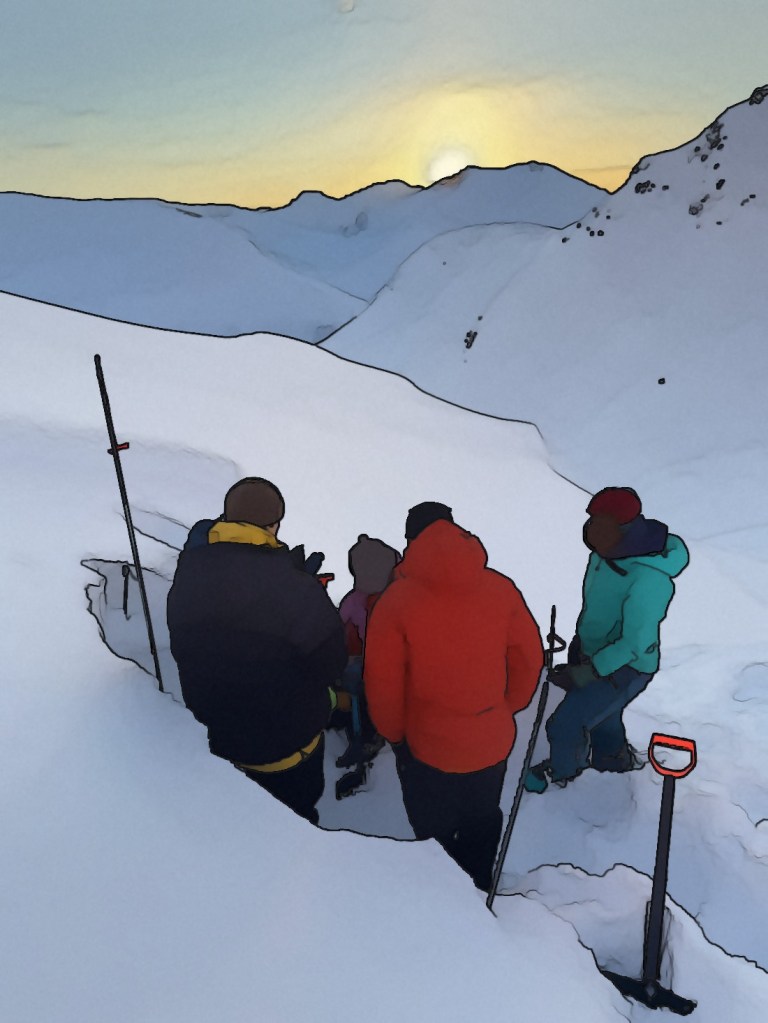
    The pit gets everyone’s attention. Who’s standing at the edge?

    We never asked the obvious follow-up: what was it like to be in that group? Was there room to say I’m not sure? Our course had eight men and two women. Did that shape who spoke up, and who was listened to? We don’t know, because we didn’t ask.

    And here’s a detail that stings a little to admit. In our discussion section, we listed five possible explanations for why the learning faded. Number five was “other factors such as group dynamics.” The first four each got a section of their own. Number five never made it into the published paper.

    Feeling safe enough

    Reimer and her colleagues (Reimer & Eriksen, 2025; Reimer, Eriksen & Warren, 2026) interviewed 17 mountain guides and avalanche professionals in Canada, the USA, France and Switzerland. All of them identified as women, 2SLGBTQ+, BIPOC or survivors of workplace trauma, in a profession that remains overwhelmingly White, cis-gender and male. What they describe is a kind of risk management most of us never have to think about.

    Participants defined psychological safety as feeling safe enough to show your full self, and to speak up when something feels unsafe, whether the threat comes from the mountain or from the people around you. Eight of the 17 drew a straight line from psychological safety to physical safety:

    “Most accidents you can trace back to some … psychologically unsafe environment.”

    They also describe what speaking up costs. Participants rationed their objections, asking themselves how bad things had to get before they said anything. Some routed their concerns through male colleagues, just to be taken seriously. One described the energy it takes to keep up a facade as a hazard in itself, because it drains attention from the things that could actually kill you.

    Reimer and colleagues call this the second shift of risk management: handling exclusion, harassment and discrimination on top of the snow, every day, often in silence. Working that second shift, it turns out, forces you to think about risk in a much wider way than most avalanche courses teach.

    Stretching the words we already use

    Here’s what struck me most. Reimer’s participants didn’t invent a new vocabulary for risk. They used the one every avalanche course teaches, the hazard, exposure and vulnerability. They simply refused to stop at the snow.

    Hazards aren’t only avalanches, rockfall and cornices. They include exclusion, harassment, discrimination and the stigma around mental health. Reimer and colleagues call these human-caused hazards. They are every bit as real as a weak layer, and unlike a weak layer, they are entirely the result of human choices.

    Exposure isn’t only the minutes you spend in a release or runout area. For the guides and avalanche professionals Reimer interviewed, it’s the evening in the hut with a guest who has made his views on your identity very clear. It’s the closed-door meeting where a supervisor asks whether you’re planning to have children. It’s a whole career of small judgements about when it’s worth speaking up. For recreational skiers, it can look different but feel familiar: being the newcomer in a crew that skis rad lines, and spending the whole trip, from the trailhead to the drive home, trying to prove you belong. Either way, the second shift doesn’t end when you take off your skis.
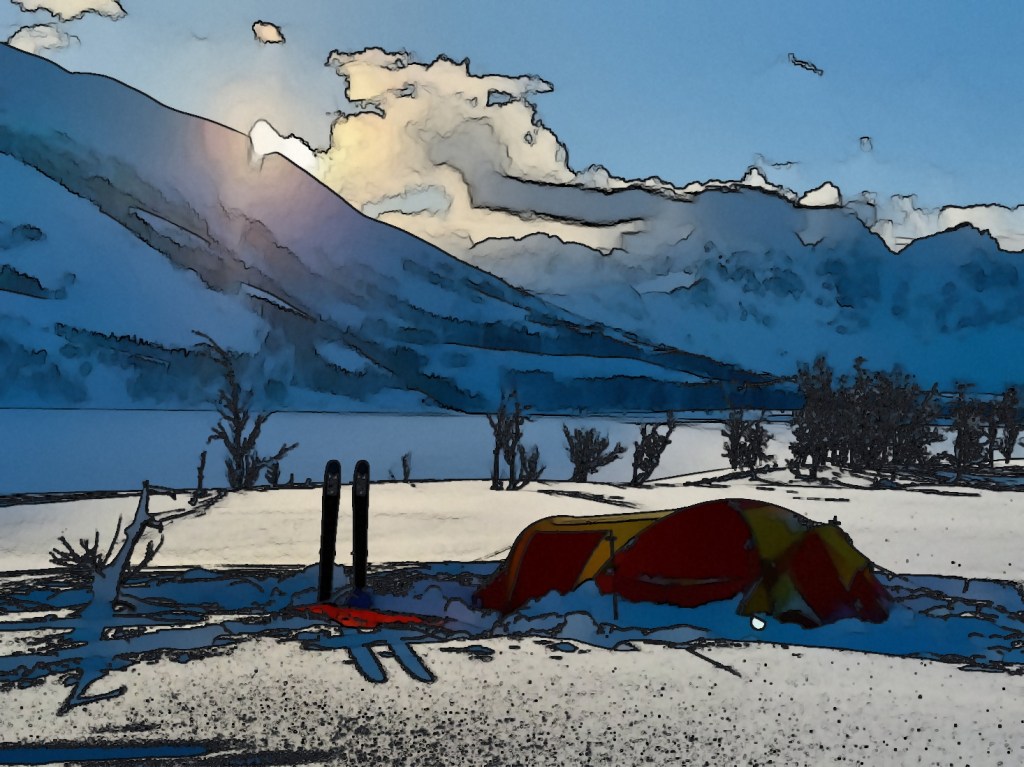
    For some, the hardest part of the trip starts after the skiing.

    Vulnerability isn’t only how susceptible you are to being hurt by an avalanche. It’s also the willingness to say I’m not sure, I’m scared or I got that wrong. Strikingly, participants saw that second kind of vulnerability as a way of reducing the first: “We can’t reduce vulnerability in the mountains unless we’re willing to be vulnerable ourselves.”

    Put together, Reimer and colleagues call this intersectional risk: a function of mountain hazards and human-caused hazards, exposure and vulnerability. It doesn’t replace the avalanche risk we already assess. It’s the same picture, with the frame pulled back far enough to include the people in it.

    To be fair, the formal definition was wide all along. The risk standard behind most avalanche training materials, ISO 31000, defines risk as the effect of uncertainty on objectives. Nothing in that sentence says only the snow. We narrowed it ourselves, in research, in framing, in practice.

    Three kinds of safety

    If risk is wider, safety has to be, too. Reading our own work alongside Reimer’s, I’ve started to think of safety as (at least) three things that depend on each other:

    • Safe from the mountain: not caught, not buried, not killed. The kind of safety we already teach and research.
    • Safe to speak: being able to say what you see and feel, including no, while the decision is still open, and without paying for it afterwards.
    • Safe to learn: being able to admit what you don’t know, make mistakes on easy days, and debrief honestly, the good days included.
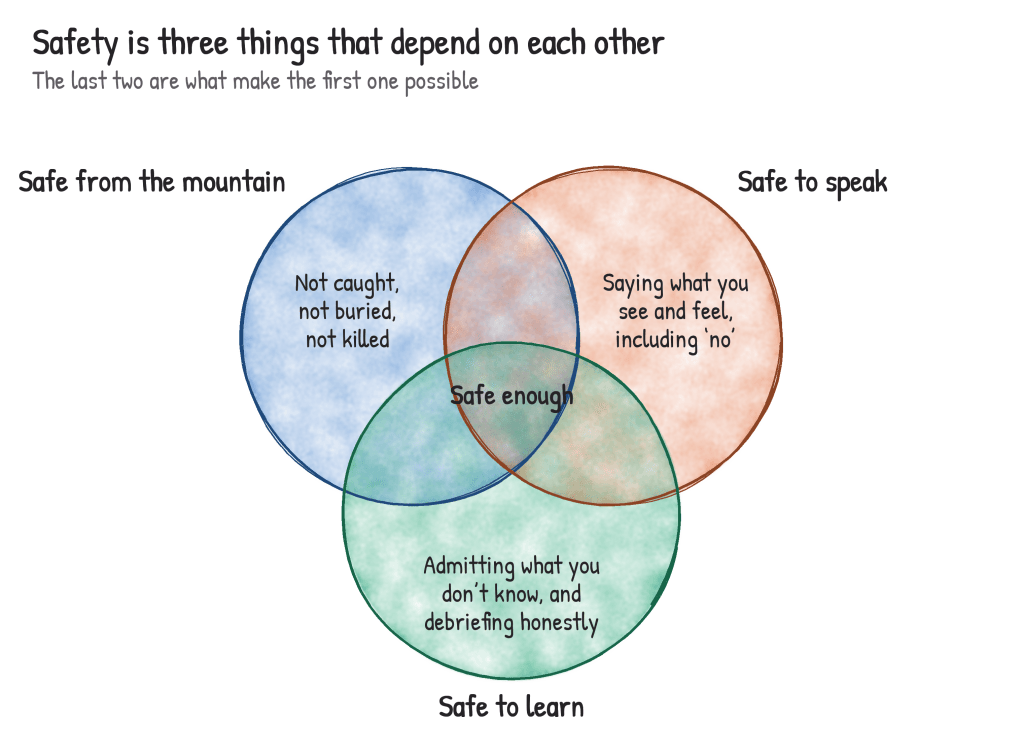
    Each circle on its own is a narrow kind of safety. Where all three overlap is what I’d call safe enough.

    Think back to Magnus’ tour. The group got lucky on the first, failed on the second, and only stumbled into the third on the drive home.

    The last two are what make the first one possible. Reimer’s participants described physical safety as both something that supports psychological safety and something that grows out of it. In our own course, the participants who reported the most learning moments were also the ones who asked for the most help, something that’s far easier in a group where admitting you don’t know feels safe. And on a mountain that doesn’t always answer back, honest feedback from our peers is the only feedback we can count on. It only flows where it’s safe to give.

    That is why my colleagues and I argue that avalanche education still runs mostly on what safety scientists call a Safety-I logic: identify hazards, apply rules, avoid failure. Wicked environments also need Safety-II: safety not as the absence of accidents, but as something a group keeps achieving, day after day, through attention, judgement, adaptation and mentored learning (Dassler & Dahl, 2026). That, in a sentence, is the wider safety this post is arguing for.

    Why the snow is such a comfortable place to look

    So why do we keep reducing safety back down to the assessment of snowpack stability? Part of the answer might be that the narrow version quietly decides where we look for problems, and therefore where we look for solutions. If safety is only about the snow, the fix is always more snow knowledge: better tests, better profiles, better courses.

    We built our study on exactly that logic, and we’d do much of it again. But here’s the thing: a perfect snow profile is worth little if the person who dug it doesn’t feel able to say I’m not comfortable with this. Our question asked whether people could reason about the snowpack. It never asked whether their reasoning had any chance of changing what the group actually did.

    There’s an uncomfortable honesty point here, too. Talking about facets and shear quality is easier than talking about who gets listened to, and who doesn’t. Snow science gives us a shared, neutral-sounding language, and that’s part of its value. But it can also become a place to hide from questions about ourselves.

    To be fair, the human factors literature hasn’t ignored groups. McCammon’s FACETS includes acceptance, communication and the expert halo. But these tend to be framed as individual errors to correct, not as properties of a group climate that someone has to actively build. And when Reimer and colleagues reviewed that literature, they found it almost never considers group make-up or unequal power.

    A few honest caveats

    I don’t want to swap one oversimplification for another, so let me be clear about what I’m not claiming.

    Reimer’s participants were professionals from non-dominant groups. Ours were recreational skiers on a course, mostly men. Peer pressure among friends on a weekend tour isn’t the same as the hierarchy between guides, clients and examiners. The mechanisms may overlap; the stakes and power structures differ.

    The link between psychological safety and accidents is, so far, drawn from participants’ experience rather than measured. Reimer and Eriksen say so themselves, and call for research that measures it. It’s tempting to claim that feeling safe to speak up would prevent most human-triggered avalanches. I find that plausible, but it deserves to be tested, not asserted.

    And none of this makes snow knowledge less important. Speaking up only helps if someone has noticed something worth saying. Psychological safety and snowpack assessment aren’t rivals; each is close to useless without the other.

    What this means in practice

    If safety means being safe from the avalanche, safe to speak and safe to learn, then the path forward isn’t only more snow science. It’s building the conditions in which what people notice can actually be said, and heard. A few concrete implications follow.

    For us as researchers, ‘Why is it safe to go?’ needs a twin: did you have any doubts you didn’t voice? Asked anonymously, and asked again in the field. We should ask who in the group could have turned it around, and how that would have been received. We could treat “I trusted the group” as data about the group, not only as a gap in the individual. And we could analyze the group dynamics data we already collect, while protecting the few participants who differ from the majority and could easily be identified.

    For all of us as touring partners, it starts at the trailhead (probably before). Ask what would make each person want to change plans or turn around today, and agree that saying so is enough. Make ‘no’ easy: one voice should be able to stop the group without having to win an argument. And notice who hasn’t said anything yet, and ask them. Magnus would have told you about the whoomph.

    One final thought

    I still think why is it safe to go? is a good question. It shows how well someone can connect the snowpack to a decision, and it costs nothing to ask during a course or on any tour. I’ll keep asking it.

    But safety isn’t only a property of the snowpack. It’s also a property of the group about to enter potentially dangerous terrain, and of the learning environment we build around it. Risk, likewise, is never only in unstable snow. Interestingly, two lines of research landed on the same word: Landrø’s PhD thesis asked why it is safe enough, and Reimer’s participants talked about feeling safe enough to speak. Residual risk never disappears, not on the mountain and not in the group.

    So maybe my favorite question needs a twin. Before anyone in your group asks why is it safe to go?, ask yourself, and your buddies, something else: is it safe to say no?

    Thanks to Tove Irene Dahl and Tarjei Westerlund for sharp and generous feedback, and to the inspiring people I met at ISSW in Whistler, whose conversations planted many of the ideas in this series.
  • What an avalanche course can’t teach you about steep couloir riding

    What an avalanche course can’t teach you about steep couloir riding

    … and why you should still take one.

    Real competence grows in the field, alongside people who know more than yourself. Since the mountain doesn’t always answer back, the honest feedback must come from our peers.

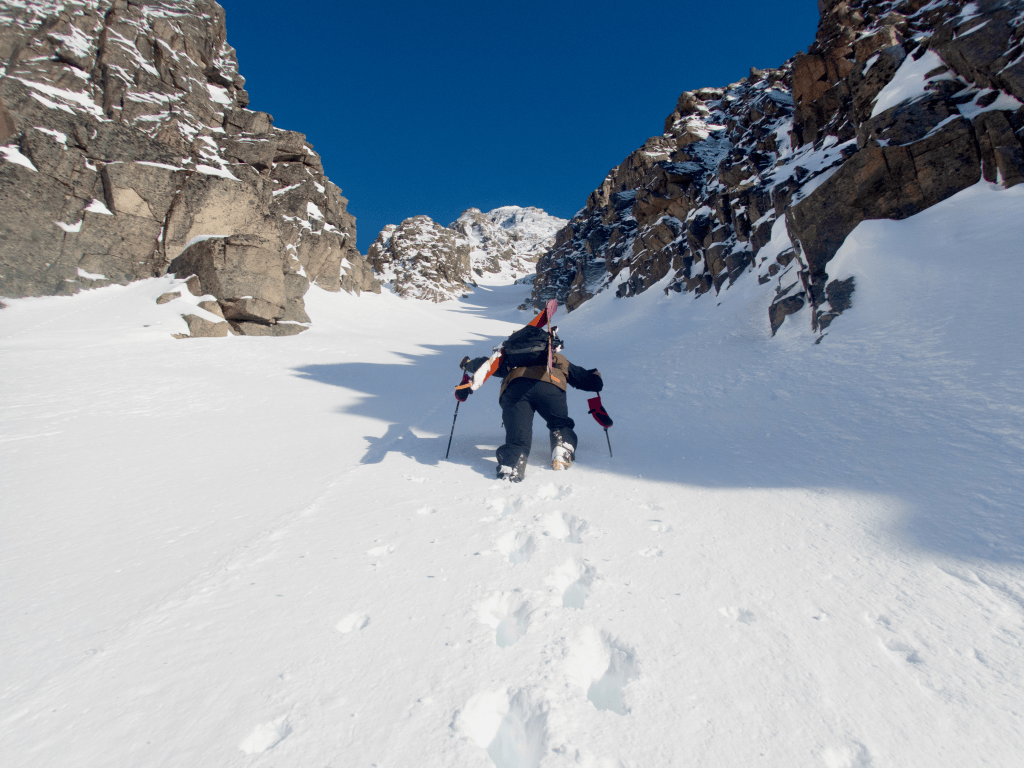
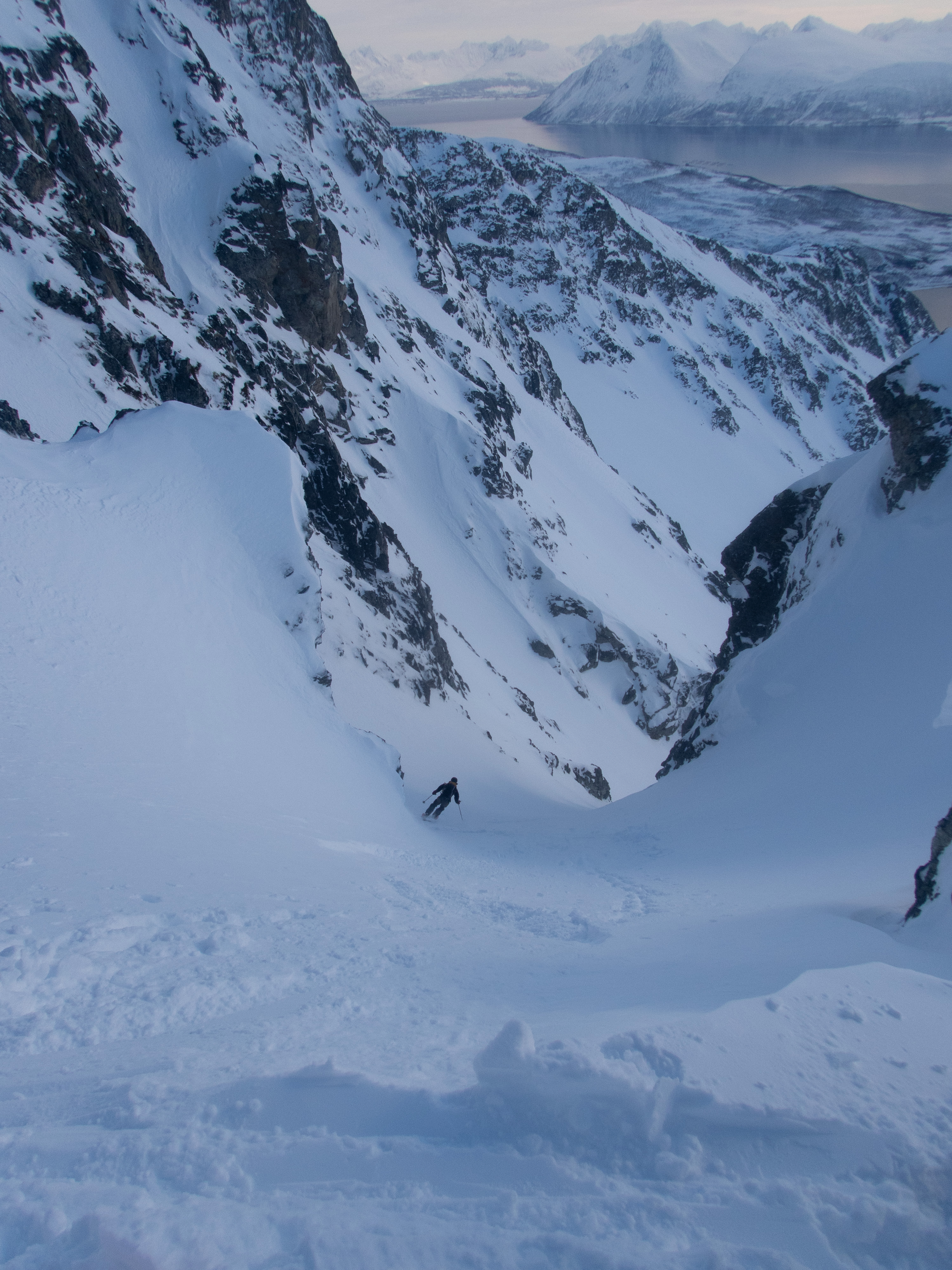
    Photo: Tarjei Westerlund

    Ask experienced steep skiers about avalanche education and you’ll hear a consistent verdict: necessary, but not enough. The courses matter! Nobody we interviewed would send a friend into couloirs without one. Almost every person said the same thing: the avy course taught them what’s dangerous, but not what to do about it in the middle of a couloir, when the real decision has to be made.

    It’s tempting to interpret that as a complaint about course quality, implying an obvious answer: more content, a fuller syllabus, a higher bar. After twenty-four interviews however, we think such an interpretation misses the point and believe this misdiagnosis is part of the problem.

    Two kinds of knowing

    “People learn couloirs the way apprentices learn a craft: by participating at the edge of it and moving inward”

    The learning theorist Etienne Wenger draws a useful distinction between knowledge that can be written down and competence that can only be lived. A course excels at the first kind: the danger scale, the decision frameworks, the rescue drill, the checklist; knowledge packaged into objects you can carry with you and be tested on. That packaging is what makes it teachable, certifiable, and scalable. It’s genuinely valuable, and you need it.

    But couloir judgment relies mostly on the second kind. The knowledge you need to decide whether this slope, in these conditions, with this partner, on this day is a go doesn’t live in a document … such knowledge accumulates through doing the thing, repeatedly, alongside people better than you. One steep skier with nearly twenty years practice said that formal training didn’t give them new knowledge so much as the words for what they already saw in the snow. A young skier put the flip side perfectly: when someone explains a decision in elaborate jargon, she gets suspicious whether they actually understand it (or just know the words).

    So, the “gap” practitioners describe isn’t a hole in the curriculum. It’s the structural space between what a course can package and what only participation and engagement can teach;  a gap we cannot close with more PowerPoint slides. Simply because the missing piece was never made of – nor found amidst – slides.

    Photo: Tarjei Westerlund

    Knowledge lives in the community

    If that’s right, the important question isn’t “what should the course cover?” but “where does this competence actually live, and who gets access to it”, and how? 

    The answer, given over and over by interviewees: mentorship. The knowledge is gained when going out with more experienced, more competent people, building up gradually, progressing from easy days to harder ones, mellow lines to steeper lines, with partners who show you rather than tell you. As one elite athlete put it bluntly: “[Knowledge] doesn’t live in any course, it lives in the mentorship thing, in going out with people who know more. People learn couloirs the way apprentices learn a craft: by participating at the edge of it and moving inward”.

    When knowledge relies on mentorship, access to mentors pose the real issue, as access is unevenly distributed. You need a mentor, you need to be brought along, you need (as one rider candidly put it) to “know the right people”. The skier whose father was an avalanche expert had a head start they humbly recognized: it gave them “a foundation, not immunity.” Exactly right. Access doesn’t make you competent, but without it, the participation that does can’t happen.

    Photo: Tim Dassler

    But what if the community is learning/teaching the wrong thing?

    Here’s the question that nags at us, and we’ll admit we don’t have a clean answer – yet. If competence grows by participating, by engaging, partaking and watching what happens, then what you learn is only as good as the feedback you get. And couloir skiing may be one of the worst learning environments imaginable in terms of feedback.

    Think about what the mountain actually tells you. You make a string of decisions, ski the line, reach the bottom, and nothing bad happens. What did you learn? That you read it right, or that you got away with something? Often these are indistinguishable. The feedback is delayed, rare, and brutally noisy: people survive genuinely bad calls all the time, and now and then a careful, reasonable person dies. One veteran said with disarming honesty: “after a good season you think you’re extremely good, when really you just had luck.” Outcomes don’t track decisions. So, experience can quietly teach the wrong lesson and feel exactly like wisdom while it does.

    And if it can happen to one person, why not to a whole community? A group can converge over years on a way of doing things that has mostly worked, and mistake “mostly worked” for “sound,” when really it’s a habit that hasn’t been punished yet. The practices pass down through the very mentorship that makes the knowledge vividly exist, meaning that the blind spots pass down too – with the same authority as the parts that are genuinely hard-won. We don’t raise this to wag a finger at steep riders; it’s no failing peculiar to them or their communities. It’s what happens to any group learning a craft when the teacher is an environment that’s sometimes kind, sometimes ambiguous, sometimes wicked – and always complex and dynamic. The honest response isn’t to pretend we’ve escaped it, but to stay a little suspicious of our own success; to ask, on the good days too, whether we did it well or if we just were lucky. 

    Photo: Tarjei Westerlund

    What this means in practice

    If competence is grown through participation rather than delivered as content, the path forward isn’t more theory; it’s building the conditions for participation. A few concrete implications follow.

    There’s a missing rung on the ladder. In most places, recreational avalanche education stops at level 2, and the next step is going pro. There is nothing in between for the keen skier who wants to keep learning. That gap is fixable: longer and more tailored apprenticeship-style formats; courses aimed at steep skiing rather than at avoiding it; workshops where learners apply their knowledge under guidance and with feedback. Encouragingly, such options are appearing. One participant took such a course this season and stated how they wished there were more.

    You can also practice the feeling of couloir riding before the consequences are real. Several practitioners pointed to “micro-terrain”; small(er), low-stakes features where you can rehearse steepness and exposure with the stakes turned down – where you are allowed to fail and able to learn from it. Then gradually ramp up.

    In communicating, we need to reach people through their own. Generic safety messaging bounces off this community; what lands comes from a trusted figure already inside it. The respected skiers are the ones who can move the culture, and the respected skiers are the ones we need to communicate through.

    Make learning part of your own practice

    One more thing, less a fix than a habit, and honestly one that doesn’t solve the feedback problem so much as to refuse to let it win quietly. Make the debrief part of the practice and debrief the good days too. Several practitioners already do some version: a post-tour review, a running “mountain journal” of what went well and what they’d change. It can’t manufacture the feedback the mountain withholds, but it does the one thing available; it forces the luck-or-skill question into the open (did we do that well, or just get away with it?) instead of letting a clean run stand as proof. Done together, out loud, it’s also how a group keeps their blind spots from hardening into cemented structures. It works because it’s a participation habit, not another procedure to file away.

    None of this replaces the avalanche course. Take the course and keep taking them; the knowledge is perishable, and even experienced people forget the basics. But take it for what it is: the foundation, not the building. The practice is learned in the field, with people who know more than you, and on a mountain that won’t always tell you the truth about how you’re doing. That’s why the scepticism must come from us, and maybe it is here that avalanche education and mentorship matter most: in providing that reflective stance, the capacity to identify the discrepancy between what you think you can do and what you actually do. If we want couloir travel done in a safer way, by more people, and without taking all the fun out of it, maybe that is where to put the effort?

    Based on an interview study of 24 experienced steep couloir practitioners, analyzed with systematic text condensation and read through Lave and Wenger’s theory of situated learning and communities of practice

  • Steep couloir riding: A relationship with the uncontrollable

    Steep couloir riding: A relationship with the uncontrollable

    Why steep skiing isn’t really about risk, why we may need to rethink the way we understand this activity, and what that means when things go wrong. 

    Mike Brownlow in Hayfork Gully, An Teallach. Photo: James Thacker

    Ask someone who has never done it why people ski steep couloirs, and you’ll usually get some version of the same answer: they’re adrenaline junkies. They want to pursue risk. Something in them needs the danger. 

    We’ve now interviewed twenty-two experienced steep couloir riders; guides, forecasters, professional freeride athletes, lifelong recreational practitioners. We’ve asked them directly what draws them to this. Almost nobody talked about risk. They talked about “aesthetic and beautiful” lines. About skiing that feels “as close to flying as you can get.” About snow as something you read and answer, not something you beat. And, again and again, about waiting: you don’t choose a line and go ski it. You watch it for a season, sometimes for years, and wait for the mountain to grant it. 

    That last phrase is worth sitting with, because it quietly dismantles the risk-seeking narrative. Risk is something you can grab any day of the winter. An encounter is not. 

    A relationship, not a thrill 

    The German sociologist Hartmut Rosa has a word for what these riders are describing: resonance — a relationship in which the world isn’t a mute backdrop or a resource, but something that addresses you and that you answer back. His sharpest claim is about what makes such a relationship possible: the other side has to be uncontrollable. Because something fully available on demand, something schedulable, guaranteed, conquerable, will eventually go silent. What moves us is precisely what we cannot command. Nature. And a steep snow-filled line.

    Steep riding is almost a laboratory case. The line cannot be summoned. The mountain, the snow decides. And here is the apparent paradox: nobody controls more than these practitioners. They plan, assess conditions, dig pits, run stability tests, debrief, train, rehearse rescue. If they were trying to eliminate uncertainty, this would make sense, but then the thing they came for would die. The control isn’t there to conquer the mountain. It’s there to let them survive staying in relationship with something that can never be made safe. Mastery in the service of contact, not control, never domination. 

    This also explains something the riders themselves point to: the difference between someone skiing a line because it calls to them, and someone skiing it for the photo, the clout, the tick. Same couloir, opposite relationships. One is a conversation, the other is a trophy hunt where the mountain has already gone mute. As one rider put it; “are you here because you’re curious, or because you want to be cool?” Practitioners can feel the difference from inside. Many of them think it’s also the difference that gets people hurt. 

    The shadow side 

    But if the fascination lives in the mountain’s uncontrollability, then we have to be honest about what else lives there. The same property that makes the relationship resonant is the one that kills, buries, and bereaves. Trauma is not an outside intrusion on this activity. It is the shadow of the very thing that draws people in. 

    One elite athlete in the study said something that should change how the community talks about this: “you don’t need to be buried or injured to be traumatised.” Being close to an avalanche is enough. Witnessing one is enough. “Digging someone out” is enough. And because so many people assume trauma requires a body count; “I didn’t die, I wasn’t hurt, I was just the one rescuing”, they never recognise what happened to them, and never get help. 

    In Rosa’s terms, what trauma does is brutal and precise: it converts resonance into alienation. The mountain that called goes silent, or hostile. The snow that answered back falls quiet. Riders describe being unable to make decisions in terrain where decision-making was once fluent: the relationship itself has been ruptured, not just the confidence. 

    And the rupture gets silenced twice over. From outside, the activity is stigmatised as reckless; “you chose this”, which withholds the sympathy that would make help-seeking legitimate. From inside, a culture that prizes boldness makes admitting trauma feel like a demotion. So, the most predictable injury in the sport stays the least discussed. 

    Repair is social 

    Here’s the hopeful part: in the accounts we heard, recovery looks like the slow rebuilding of the same relationship. And it happens socially. The athlete who spoke most openly about their PTSD returned to the mountains only with people they trusted, telling them explicitly: “I cannot make decisions right now; you have to.” They rebuilt their confidence by teaching, reminding themselves how much they actually knew. They gave it time. And their rule? “If you can’t communicate your state, stay out of the mountains until you can.” 

    That’s not a clinical protocol. It’s a community practice, and it points to what the reframing is ultimately for. If we keep telling the risk-seeking story, trauma looks like the foreseeable bill for a selfish habit, and silence is made reasonable. But if this is, at its best, a demanding relationship with a world that cannot be made available, then trauma is a rupture in that relationship, recovery is its repair, and the community around the rider is where that repair happens. We should talk about it that way: openly, without the morally high-horsed finger raised, saying “you chose this“. And we should address this with the same attention we give beacons and rescue drills. 

    The mountain answers back, that’s the whole draw. Sometimes the answer is devastating, and the people who receive it deserve better than silence.

    ——

    You can read more about the project at intothesteep.com. And if you have a story of your own to share, We’d love to hear from you.

  • Skredworkshop: Hvorfor er det lurt?

    Skredworkshop: Hvorfor er det lurt?

    “Jeg var helt sikker. Men jeg tok feil.”

    Det var Bjarne som sa det, etter andre dag på workshopen. Vi satt samlet i fellesrommet, gikk gjennom dagens turer.

    “Jeg ville kjørt dette henget. Jeg var helt sikker på at det var trygt. Men, etter å ha sett testen og snøblokka skli ut … jeg tok feil.”

    Stilhet. Så nikking rundt hele rommet.

    Det er slike øyeblikk som gjør skredworkshopen så verdifull.

    Kompetansen du ikke visste at du manglet

    Bjarne er ikke nybegynner. Han har gått skredkurs. Han har flere sesonger med toppturer bak seg. Han vet hva et svakt lag er, hvordan man leser en snøprofil, hvordan man tolker skredvarslingen.

    Men, som mange av oss, går han turer basert på en kombinasjon av kunnskap og… tja, flaks.

    Han trodde han gjorde gode vurderinger. Men fikk aldri vite det.

    Det er gapet workshopene fyller.

    Fra teori til praksis

    Når du tar skredkurs lærer du:

    • Hva skredproblemer er
    • Hvordan du undersøker snøen
    • Hvordan du leser varselet
    • Hvordan du bruker skredutstyret til å utføre kameratredning
    • Hvordan du planlegger turer

    Det er viktig kunnskap. Grunnmuren.

    Men så står du der, på turen, med skiene på. Du er usikker. Teorien er plutselig ikke like klar. Kartet ser annerledes ut i virkeligheten. Gruppa er utålmodig. Snøen ser perfekt og meget fristende ut.

    Hva gjør du?

    Workshopformelen: Praksis + Veiledning = Kompetanse

    Dette er det geniale med workshopkonseptet:

    Før turen: Du planlegger sammen med gruppa. Instruktørene bidrar med kunnskap og erfaring og stiller spørsmål. “Hvorfor denne ruta?” “Hva er skredproblemet?” “Hvilken tilnærming bør vi ha til fjellet i dag?” “Hvor ligger den gode og trygge snøen?” “Hva er plan B?”

    Under turen: Du tar beslutningene sammen med gruppa. Instruktørene observerer. Noen ganger griper de inn. Oftere lar de deg oppdage selv.

    Etter turen: Tilbakemeldinger. “Så dere det ferske skredet?” “Hvorfor valgte vi den linjen?” “Hvorfor var det trygt?” “Hva kunne vi gjort annerledes?”

    Det er i denne syklusen læringen skjer. Ikke gjennom forelesninger, men gjennom erfaring, refleksjon og utprøving … med et sikkerhetsnett.

    Tre tradisjoner, ett mål

    Her i Nord har vi bygget opp noe unikt: tre etablerte workshoper, hver med sin egen karakter.

    Ski- og skredworkshopen – Alta FHS: Møteplassen

    40 mennesker. Elever fra folkehøgskolen blandet med erfarne toppturfolk fra hele landet. Skjervøy ungdomsskole som base. Bjørn Michalsen som drivkraft.

    Dette er workshopen der energinivået er høyest, der du møter folk fra helt ulike miljøer, der toppturkulturen fra Tromsø møter kulturen fra Alta.

    Ofte fulltegnet med en gang. Og det er en grunn til det.

    Mer info

    DNT Fjellsport: Den som aldri er lik

    Noen år telt. Noen år hytte. Noen år luksus. Konseptet endres, men kjernen består: små grupper (maks 6 per instruktør) og sertifiserte veiledere.

    Perfekt hvis du liker variasjon, eller hvis du vil prøve ulike sider av vintertoppturlivet.

    Mer info

    Tromsø Powder Guides: Velg din egen versjon

    Her bestemmer du selv. Vil du ha budsjettversjonen? Sov i telt. Vil du ha komfort etter lange dager i fjellet? Book deg inn på et sted med god mat, badstue og jacuzzi.

    Samme kvalitet på veiledningen. Tilpasset opplæring. Du velger bare rammen rundt.

    Mer info

    Trygt å prøve, trygt å feile

    “Men er det ikke farlig å la deltakerne ta beslutningene selv?”

    Ved høyrisiko aktiviteter vil det alltid være en restrisiko i det man holder på med. Som med så mange andre ting i livet. På skredworkshop ivaretas sikkerheten gjennom at alle turene planlegges i fellesskap og godkjennes av workshopledere. Sertifiserte instruktører er med på gruppene. De bidra med innspill og kompetanse og de griper inn hvis det trengs.

    Men, og dette er viktig, de lar deg også ta beslutninger. Og noen ganger tar du feil beslutning. Og du lærer av det. I trygge omgivelser.

    Dette er læringsarenaen. Her kan du prøve, feile, få tilbakemelding, justere.

    I virkeligheten, når du er på tur med vennene dine, har du ikke den luksusen.

    Hvorfor jeg digger workshop

    Jeg er med på alle tre workshopene hvert år. Som deltaker og som instruktør.

    Hver gang lærer jeg noe nytt. Om snø. Om skred. Om gode måter å si ifra på. Om meg selv. Om hvordan forskjellige mennesker tenker ulikt, men kommer fram til samme konklusjon. Eller hvordan to personer ser på samme heng og vurderer helt ulikt.

    Men mest av alt: Jeg ser endringen … transformasjonen.

    Jeg ser folk som Bjarne, som kommer og tror de kan dette, og innser at de har overlevd på flaks.

    Jeg ser nybegynnere som kommer og er litt nervøse og usikre på det meste, og går derfra med genuin kompetanse og tryggere på egne vurderinger. Sepsielt de gangene man må si ifra når man er usikker. De gangene det kanskje er lurt å snu.

    Jeg ser grupper som går fra å være en samling av usikre individer med dårlig kommunikasjon til å bli fungerende team som tar gode beslutninger sammen.

    Din tur

    Kanskje kjenner du deg igjen i Bjarnes situasjon. Kanskje har du hatt flaks på turene dine. Kanskje har du tatt gode beslutninger, men aldri fått vite det.

    Kanskje er det på tide å finne ut av det.

    Velg din workshop:

    Alta FHS – for den totale workshopopplevelsen med stort miljø

    Mer info

    DNT Fjellsport Troms – for for deg som vil prøve ut ulike sider av vintertoppturlivet

    Mer info

    Tromsø Powder Guides – for fleksibilitet og skreddersydd kompetanse

    Mer info

    Eller gjør som meg: Prøv alle tre.

    Fordi målet ikke er å samle kursbevis. Målet er økt tur- og skiglede. Å bli tryggere på egne vurderinger. Å kunne si ifra på en god måte. Å finne den gode, trygge snøen. Å komme hjem og fortelle de man er glad i om alle de fantastiske opplevelsene.

    Og det lærer du ikke i et klasserom.

    Det lærer du der ute. Med ski eller brett på beina. Med en kompetent veileder ved siden av deg.

    Vi sees i fjellet.

  • Hvordan vurdere skredfaren i et heng på en systematisk måte?

    En praktisk huskeliste for “SSU” som du kan ta med på tur!

    Før jeg går inn den bratte toppflanken går jeg forbi en annen turgruppe. “Finner dere noe spennende?” spør jeg gjengen som nettopp har sjekket snøen og gravd en snøprofil. “Ja, det er litt lagdeling, men det er jo nesten alltid sånn om vinteren,” svarer de. “Er det trygt å fortsette, eller er det skummelt?” Gjengen utveksler blikk. De ser på meg. “Nei … Det går vel greit,” sier de, litt spørrende.

    Har du vært i en lignende situasjon? Kanskje har du tatt et grunnkurs eller til og med et videregående skredkurs. Du har lært om skredets anatomi, farlig lagdeling og ulike tester for å oppdage og vurdere svake lag. Men hvordan bruker du denne kunnskapen i praksis? Kan du tolke det du ser og bruke det til å bedømme snødekkets stabilitet?

    SSU – En kort introduksjon

    Det finnes flere metoder for å vurdere stabiliteten i snødekket og om et heng er trygt. En effektiv metode er den systematiske snødekkeundersøkelsen (SSU), utviklet i 1996 av Georg Kronthaler. Denne videoen gir en god gjennomgang og forklaring—om du forstår tysk 😄

    SSU kan brukes både til å vurdere skredfaren i et enkeltheng og til å bestemme skredproblemene (og faregraden) for en hel region. I Norge brukes SSU blant annet av NVE/Varsom og deres observatører til å bestemme skredfare over en region uten å risikere å bevege seg i farlig terreng. Det er et nyttig verktøy ikke bare for observatører, men også for turgåere som skal vurdere om snøen i et heng er stabil. Skal du bli skredinstruktør, må du kunne bruke SSU som arbeidsverktøy og til å underbygge dine valg. En stor fordel med SSU er at du kan vurdere stabiliteten uten å selv være i skredterreng.

    For å vurdere stabiliteten i snødekket og om et flakskred (les mer her) kan løses ut, sjekker vi for to hovedelementer: 

    1. Et svakt lag i snøen, som for eksempel nedsnødd nysnø eller overflaterim, der et brudd kan oppstå og forplante seg. 
    2. Et fastere overliggende lag av bundet snø, for eksempel fokksnø, som dekker laget med svake bindinger.

    Dett kan vi gjøre ved hjelp av SSU. Fremgangsmåten består av tre deler:

    1. Lille blokktest (LBT) for å identifisere det svake laget og det egenskaper
    2. Analyse av funn fra LBT og overførbarheten ved hjelp av prosesstenkning
    3. Vurdering av funn og situasjonen

    Dersom du vil lære mer om SSU, bør du studere dette knallgode faktaarket fra NVE. I tillegg bør du få en grundig opplæring i hvordan du kan utføre og anvende SSU i praksis.

    VIKTIG! 

    SSU er utviklet for eksperter og krever god kunnskap om omvandlingsprosesser i snødekket. Så det er viktig at du får god opplæring i hvordan SSU bør brukes og dens begrensninger. 

    Naturen er dynamisk og kompleks. Uansett hvor mye kompetanse en har, blir det aldri helt trygt å drive med bratt skikjøring på lagdelt vintersnø. Vær klar over at heller ikke SSU kan eliminere all usikkerhet knyttet til vurdering av snødekkestabiliteten. Du kan bruke SSU som støtte til å gjøre en systematisk vurdering av snødekket. SSU kan gi deg en indikasjon på om situasjonen er gunstig eller ugunstig. I mange tilfeller vil du ikke få entydige svar, men SSU vil kunne hjelpe deg med å samle inn informasjon for å kunne underbygge og begrunne dine beslutninger i og rundt skredterreng.

    For å øve på enkelthengsvurderinger bør du derfor finne terreng som tillater at du gjør feil – og at du kan lære av disse. Det viktigste er at du finner en trygg plass, utenom skredterreng, for å gjennomføre LBT. 

    En praktisk huskeliste

    Å huske alle detaljer i SSU kan være utfordrende når du er i fjellet, selv etter at du har fått opplæring. Derfor har jeg laget en huskeliste som oppsummerer SSU på en enkel og oversiktlig måte.

    Du kan laste ned huskelisten som PDF eller bildefil, så du enkelt kan ha den tilgjengelig på mobilen eller utskrevet.

    Last ned her: PDF // PNG bildefil 

    Har du tips til hvordan gjøre huskelisten enda mer brukervennlig for turbruk? Jeg hører gjerne fra deg!

    Bruk på eget ansvar!

    SSUt er basert på forskning fra Tyskland og NVEs faktaark, men er ikke offisielt godkjent eller kvalitetssjekket av NVE. Den er utviklet med hjelp fra kompetente skredinstruktører i DNT Fjellsport Troms. En stor takk til Håvard Lium, Richard Fjellaksel, Thorleif Svendsen og Sofia Henriksson for deres innspill og kommentarer.

  • Why safe enough isn’t (always) good enough

    Personal experiences and reflections on the necessity of multiple mindsets when judging safety in the mountains

    “Did you hear that?” my ski touring buddy asks when the snowpack suddenly settles with a whoompf sound. Seven people in our group already skinned over the same spot. “Yeah, I felt that, too.” “Should we check?”, she asks. I´m nodding excitedly. One quick hand shear test later we get a small block popping out on a smooth surface and 1.5mm large facets. “Wow, I did not expect that!”. Now the others in the group come around checking out what’s going on. We follow up with an ECT. A crack propagates and the whole block pops on 12 taps 40cm deep. “Yeah, but it’s still safe!” exclaims one of our touring partners. Is it though? Or is our touring buddy looking for reasons why it was safe enough to continue the way we planned, reasons that confirm our initial mindset? Does the resistance in changing our approach due to newly discovered evidence tempt us to find explanations why the weaknesses in the snowpack that we just witnessed first hand and that can create avalanches with relatively little additional load could be ignored?

    The Take Home Message

    What can you do?

    • Sticking to just one way of thinking makes it hard to adapt when conditions change or new information comes in.
    • Be prepared to switch between different mindsets during the fact-finding, assessment and the justification phases of a tour in avalanche terrain.
    • Look for and be open to evidence that contradicts your initial assessment of why something might be “safe enough”.

    The process

    How can you do this?

    • You can do this by having a ‘devil’s advocate’ in the group whose job is to find reasons why the plan might NOT be safe enough.
    • Before committing to a line, ask everyone in the group to justify why it is “safe enough” using the collected information.

    Go through the following checklist

    • Have I thoroughly considered all relevant conditions related to snow, weather, and people?
    • What am I not able to assess?
    • What am I uncertain about (in the snow, the group, myself)?
    • Have we discussed the conditions in the group?
    • Have we forgotten anything? (e.g. look for signs of instability in the snow, identifying invisible thought and group processes that might influence our ability to make a high quality judgment)
    • Why is it safe enough? Can I justify the quality of my decision process and the result to the ones that care for me and the ones who care for the members of our group if we made a mistake and something goes wrong?
    • There is no guarantee that a high quality decision process will lead to the desired result. It simply minimizes (but does not eliminate) the effect luck has on our choices in the mountains.

    info box

    What´s a mindset?

    A mindset refers to a set of attitudes or ways of thinking that shape how a person views and responds to situations. It’s like having a personal filter for how you interpret and react to different aspects of life. For example, if you have a positive mindset, you tend to see opportunities and possibilities even in difficult situations. Conversely, with a negative mindset, you might focus more on the obstacles and challenges.

    Think of it as wearing a pair of glasses. Depending on the color of the glasses, what you see changes. Similarly, your mindset affects how you perceive your experiences and can influence your attitudes and behavior.

    Asking “Why is it safe enough” increases the quality of the decision-making process.
    Really?

    Studies by Landrø (2021) and Stephensen et al. (2020) find that people make safer and more conservative decisions when asked to focus on safety instead of just risk. This is explained by the argument that when people ask why it is dangerous and do not see any signs of danger (e.g. because they are not trained to do so) they will automatically assume that it is safe. In wicked environments that do not always provide correct feedback this can have fatal consequences. So, rather than asking “Why is it dangerous?”, they recommend that we ask ourselves and our touring partners “Why is it safe enough?”

    I find this research truly inspiring. Like the researchers and practitioners above, I believe in the importance of having solid reasons and justifications for why a particular ski line or objective is safe enough. That’s why I’ve made it a habit to ask, “Why is it safe enough?” This question isn’t just for me; I pose it to my ski buddies, my students, and even avalanche instructors under training during my field work and avalanche courses. Here are some of the responses I’ve gotten:

    “Because it was written in the avalanche forecast.”

    “The snow feels stable.”

    “I have never been asked this question.”

    “There are stable conditions now.”

    “Yeah, but it’s still safe!” (You recognize this one from the introductory story above.)

    All these answers tackle the question “Why is it safe enough?”, or at least why folks think it is. But are these responses really good reasons indicating a high quality decision making process?

    The problem: Confirmation bias and motivated reasoning

    In my experience, asking “Is it safe enough?” too early can lead us to overlook important details in the fact-finding phase. Especially if we develop an idea (too early in the process, and not based on observations) that something is “safe enough”, it will lead us to look for evidence that supports our hypothesis. This is commonly called confirmation bias. Seeking evidence that only supports our views, while ignoring contrary evidence and diverging perspectives, can lead to motivated reasoning. That is, our motivations (e.g. to ski a certain line, or tick off a certain objective/peak) influence our ability to find relevant reasons why the objective is “safe enough”. We might never actively look for signs indicating why it could be dangerous, and thus never really consider the danger. 

    If we are never looking for why something might be dangerous, then we always only see the facts we want to see.

    info box

    Confirmation bias

    Imagine you’re a detective in one of those classic mystery stories, but instead of looking at all the clues to figure out whodunit, you decide right from the start that the butler did it. Now, every clue you find, you interpret it as “Ah, this definitely shows the butler is guilty!” even if it’s just a piece of lint in the hallway. You ignore clues that might show the gardener or the chef could be involved. That’s confirmation bias.

    Confirmation bias is like having blinders on that keep you only looking in one direction. It’s when you have an idea in your head, and then you subconsciously pay attention only to the information that agrees with your idea and ignore anything that disagrees. It’s like cheering for your favorite team and only seeing the fouls made by the opposing team while missing all the fouls your team is making.

    So next time you’re sure about something, remember to take off those “team-colored” glasses and look around; you might find the game is different from what you thought!

    The other problem: The need for competence

    To assess the quality of the argument why it is safe enough, we need to be competent to assess the conditions ourselves. This demands competence in assessing snowpack dynamics and stability, people dynamics and group processes, as well as individual motivations and goals in a holistic assessment of the situation. 

    Let me give you a short example; I am a highly motivated reasoner. If I think something is worth doing, I will find a lot of reasons why it is doable, including why it is “safe enough”. Unless you are equally good (or better) in assessing the conditions, it will be easy for me to convince/coerce you that our plan is “safe enough”, even though it is not. This behavior could be the biggest risk to both your safety and mine in the mountains. I admit, without pride, that I have done that many times, both consciously and unconsciously. 

    Info box

    Motivated reasoning

    Motivated reasoning is like being your brain’s own defense attorney, always arguing in favor of what you want to believe, even if the evidence doesn’t quite match up. You might ignore facts that don’t fit your case and highlight the ones that do. It’s like insisting your favorite team is the best even when they’re on a losing streak because you’re so loyal to them.

    So, next time you catch yourself justifying a shaky opinion, think: “Am I taking into account all the evidence, or am I just rooting for my favourite idea?”

    What´s safe enough is a value judgment and will depend on who you ask

    I often find myself in situations where a group of skilled skiers, all competent in assessing snow conditions, disagree about when it is ‘safe enough. What I consider safe enough might not seem safe enough to you. This seems to be because ‘safety’ is a value judgment that varies along a spectrum. If you’re getting closer to the absolute extreme of safety on the spectrum, aiming for the highest level of safety and being too cautious, can restrict our actions and conflict with our desire to explore the mountains. Therefore, it becomes challenging to agree on our exact position on this safety spectrum. In these cases, the best approach is often to agree on a common mindset. Please share your thoughts below on how to handle safety judgments that vary among competent people.

    What´s safe enough depends on related skills, such as skiing skills

    If you’re a skilled skier, you might be able to ski away from avalanches that could otherwise be harmful. So judging the conditions to be safe enough will not only depend on the assessment of snow stability, but also if you think you can handle the consequences if you are wrong and trigger an avalanche.

    The solution: Dynamic mindsets

    We need to be able to switch between multiple mindsets when assessing, judging and deciding on the conditions and if our plans are “safe enough”. This means that we should ask both questions: “Why could it be dangerous?” AND “Why is it safe enough?” continuously during the whole process of planning and executing a ski touring trip in and around avalanche terrain. Especially during the planning and fact finding-phase (skinning up, assessing snow and conditions) of a ski tour we should look for danger signs, in the snow, the weather, the group or ourselves. It is important that we are open to evidence that contradicts our motivation, plans and initial assessment. Continuously asking “Why is it NOT safe enough, and why IS it safe enough?” will ensure that we have collected the information we need to argue and justify either the one or the other.

    We should aim to participate in groups that can help and support each other in asking these questions and that aspire to make shared decisions through open communication.

    Motivation (and its underlying processes) affecting our behavior seems to hold true for other safety behaviors, too. Let me finish with a little anecdote one of my co-researchers told me on a ski tour.

    “I have this friend who forgot his beacon on one of our tours. When the group wanted to do a beacon check, he was arguing to do it later, on a flat part once we got a bit further up the mountain. Presumably to coerce the group into not doing it and not discovering that he had forgotten his beacon.”

    So was it safe enough?

    You might wonder what happened to our group from the short story above and whether the conditions were safe enough. Well, after the positive ECT result (which was bad news for skiing steep lines) we cranked down our offensive mindset two notches and reassessed the situation. To our best abilities we judged the situation to still be quite safe, i.e. safe enough, in general, and that the positive ECT result was mainly due to a local hot spot where the weak layer was active. When we continued probing the snowpack making our way to the peak, both facets became smaller and the bed surface much less smooth so no cracks could propagate.   

    One final thought

    I wholeheartedly agree that as human beings we have to be able to say “this is safe enough”, and “this is good enough”, both in snow covered mountains as in everyday life. Using high quality arguments supporting why something is doable and “safe enough” given the current conditions, are important for justifying our decision making process. I practice it myself with my tour buddies and I challenge my students at both recreational and pro avalanche courses to ask this question in order to increase the quality of our decision making process. But overemphasizing the question “Is it safe enough?” during the planning and fact finding phases of a ski tour is simply not good enough. It cannot ensure that we have made the best decision possible and that I can justify the quality of my decision process and result to the ones that care for me and the members of our group if we made a mistake and something goes wrong. The tricky part about motivational reasoning and confirmation biases is that we often don’t notice when they sneak up and trip us up. Perhaps our touring buddies can notice, though?

  • Hvordan ta gode beslutninger som gruppe?

    Når vi ferdes i skredterreng skal vi beherske mange ting. Vi skal kunne utføre kameratredning, gjenkjenne skredterreng, analysere og tolke snøen og følge med på beslutningsprosessene i gruppa.

    Mens det finnes godt utprøvde og etablerte metoder for hvordan kameratredning skal gjøres, fantastiske verktøy får å finne ut om vi er i terreng hvor vi enten kan løse ut et snøskred eller få det i hodet, blir det fort vanskeligere når vi skal si noe om at snøen er stabil og om vi blir påvirket av egen motivasjon eller gruppeprosesser som setter oss i fare for å ta dårlige beslutninger.

    I Norge er det den systematiske snødekkeundersøkelsen (SSU) som er den anbefalte arbeidsmetoden for å undersøke snødekket og systematisere vurderingen av snøens stabilitet.

    Men hvordan tar du egentlig gode beslutninger i gruppa? Og finnes det verktøy for å følge med på om du blir påvirket av egen motivasjon eller “usynlige” gruppeprosesser til å ta farlige beslutninger?

    Her kan varsom sitt skredkort være til hjelp, men det inneholder mye info og kan være tungvindt å bruke på tur. Et godt alternativ som fokuserer kun på gruppeprosesser er verktøyet til den sveitsiske skredvarsleren og forskeren Benjamin Zweifel. Verktøyet heter S O C I A L og skal hjelpe deg med å identifisere prosesser som påvirker beslutningene i gruppa.

    Jeg har oversatt verktøyet til norsk. Du kan laste ned verktøyet, printe det ut, laminere det og ta det med på tur. Eller lag deg et visittkort med S O C I A L trykt på baksiden.

    S O C I A L: Et gruppeprosess-verktøy utviklet av Benjamin Zweifel. Oversatt av Tim Dassler

    Selv om S O C I A L bygger på mye skred-, sosiologisk og psykologisk forskning er ikke det en helgardering mot å ta dårlige beslutninger. Men det er en fin liten sjekkliste som kan brukes både når dere planlegger turen, og når turen gjennomføres. Husk at det vil kreve litt øvelse å innarbeide en god praksis og å bli vant med å gå gjennom sjekkpunktene kontinuerlig. Du kan f.eks. bruke småpausene til dette. En god tilnærming kan være å sjekke S O C I A L samtidig som du sjekker snøen:

    Jo mer krevende forhold og terreng, jo oftere bør du sjekke både snøen, gruppa og egen motivasjon.

    Her kan du lese mer om verktøyet og hva som ligger bak de seks S O C I A L dimensjonene (engelsk artikkel).

    Last ned PDF-versjonen her: