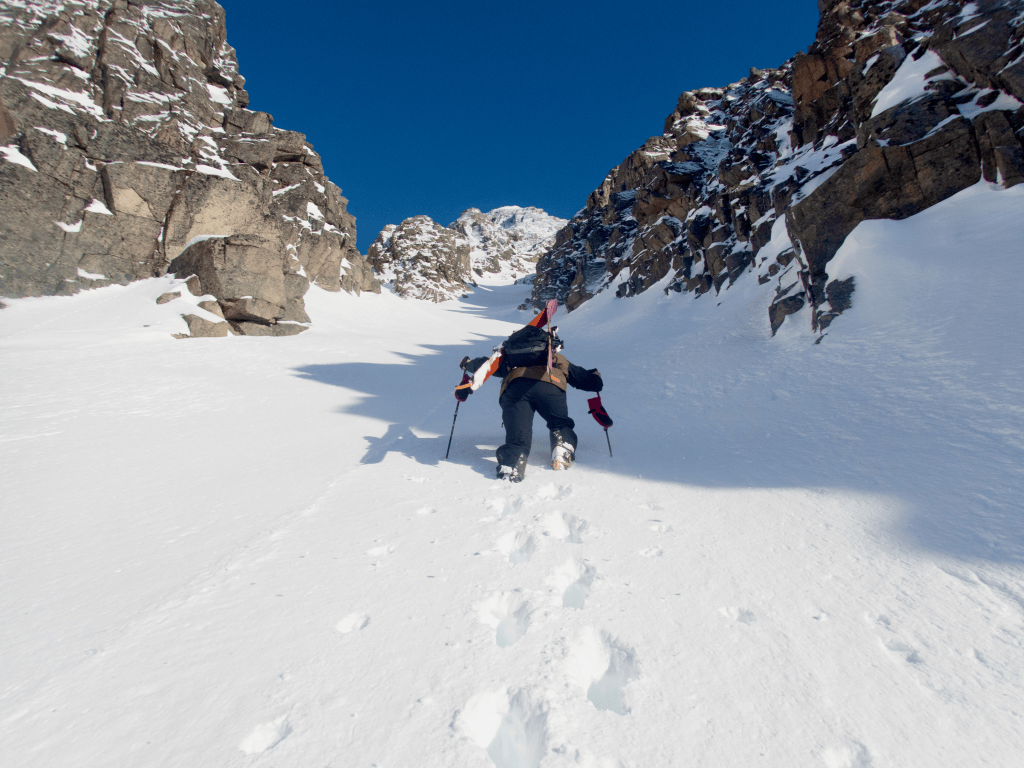
… and why you should still take one
Real competence grows in the field, alongside people who know more than yourself. Since the mountain doesn’t always answer back, the honest feedback must come from our peers.
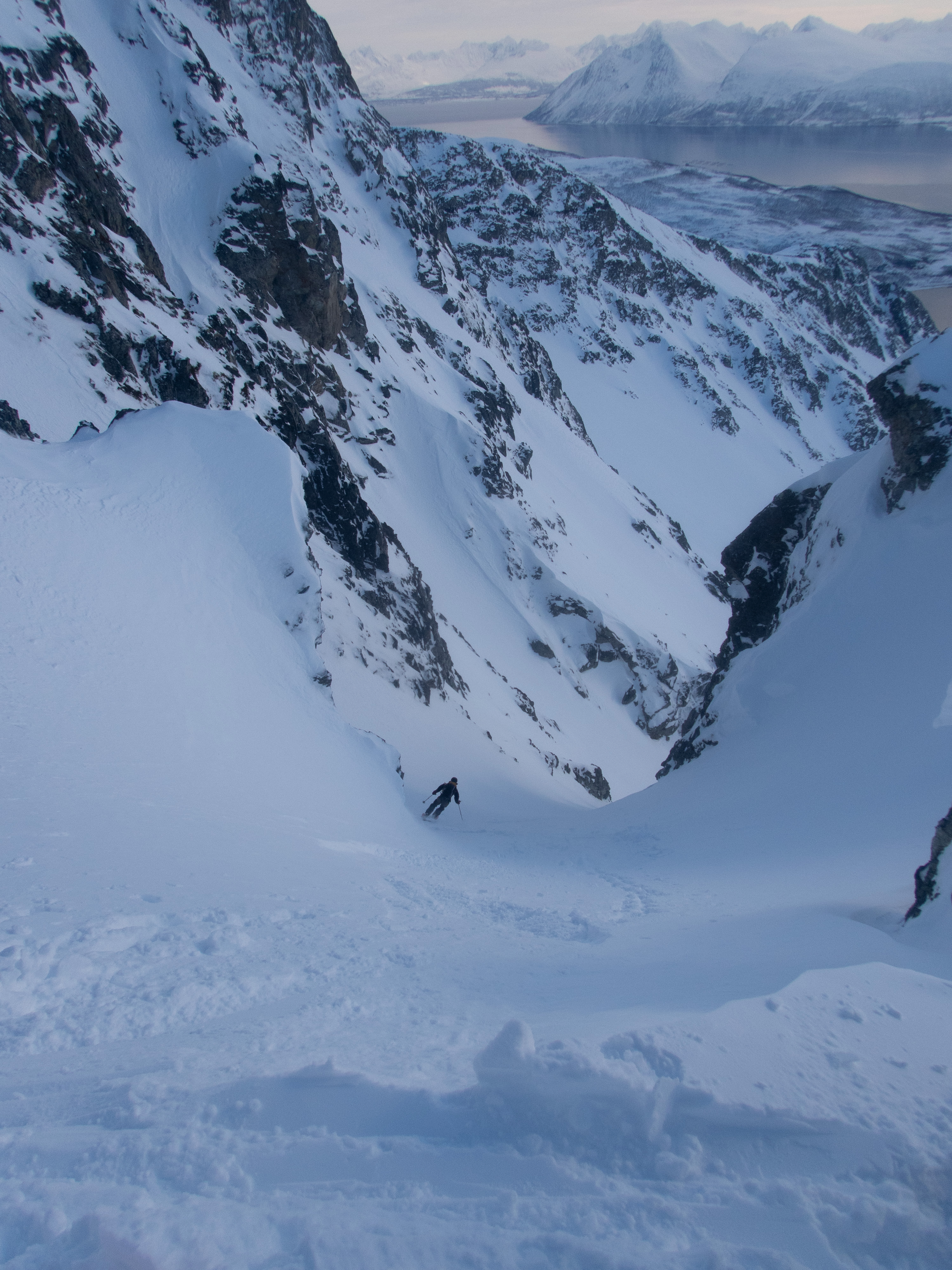
Photo: Tarjei Westerlund
Ask experienced steep skiers about avalanche education and you’ll hear a consistent verdict: necessary, but not enough. The courses matter! Nobody we interviewed would send a friend into couloirs without one. Almost every person said the same thing: the avy course taught them what’s dangerous, but not what to do about it in the middle of a couloir, when the real decision has to be made.
It’s tempting to interpret that as a complaint about course quality, implying an obvious answer: more content, a fuller syllabus, a higher bar. After twenty-four interviews however, we think such an interpretation misses the point and believe this misdiagnosis is part of the problem.
Two kinds of knowing
“People learn couloirs the way apprentices learn a craft: by participating at the edge of it and moving inward”
The learning theorist Etienne Wenger draws a useful distinction between knowledge that can be written down and competence that can only be lived. A course excels at the first kind: the danger scale, the decision frameworks, the rescue drill, the checklist; knowledge packaged into objects you can carry with you and be tested on. That packaging is what makes it teachable, certifiable, and scalable. It’s genuinely valuable, and you need it.
But couloir judgment relies mostly on the second kind. The knowledge you need to decide whether this slope, in these conditions, with this partner, on this day is a go doesn’t live in a document … such knowledge accumulates through doing the thing, repeatedly, alongside people better than you. One steep skier with nearly twenty years practice said that formal training didn’t give them new knowledge so much as the words for what they already saw in the snow. A young skier put the flip side perfectly: when someone explains a decision in elaborate jargon, she gets suspicious whether they actually understand it (or just know the words).
So, the “gap” practitioners describe isn’t a hole in the curriculum. It’s the structural space between what a course can package and what only participation and engagement can teach; a gap we cannot close with more PowerPoint slides. Simply because the missing piece was never made of – nor found amidst – slides.
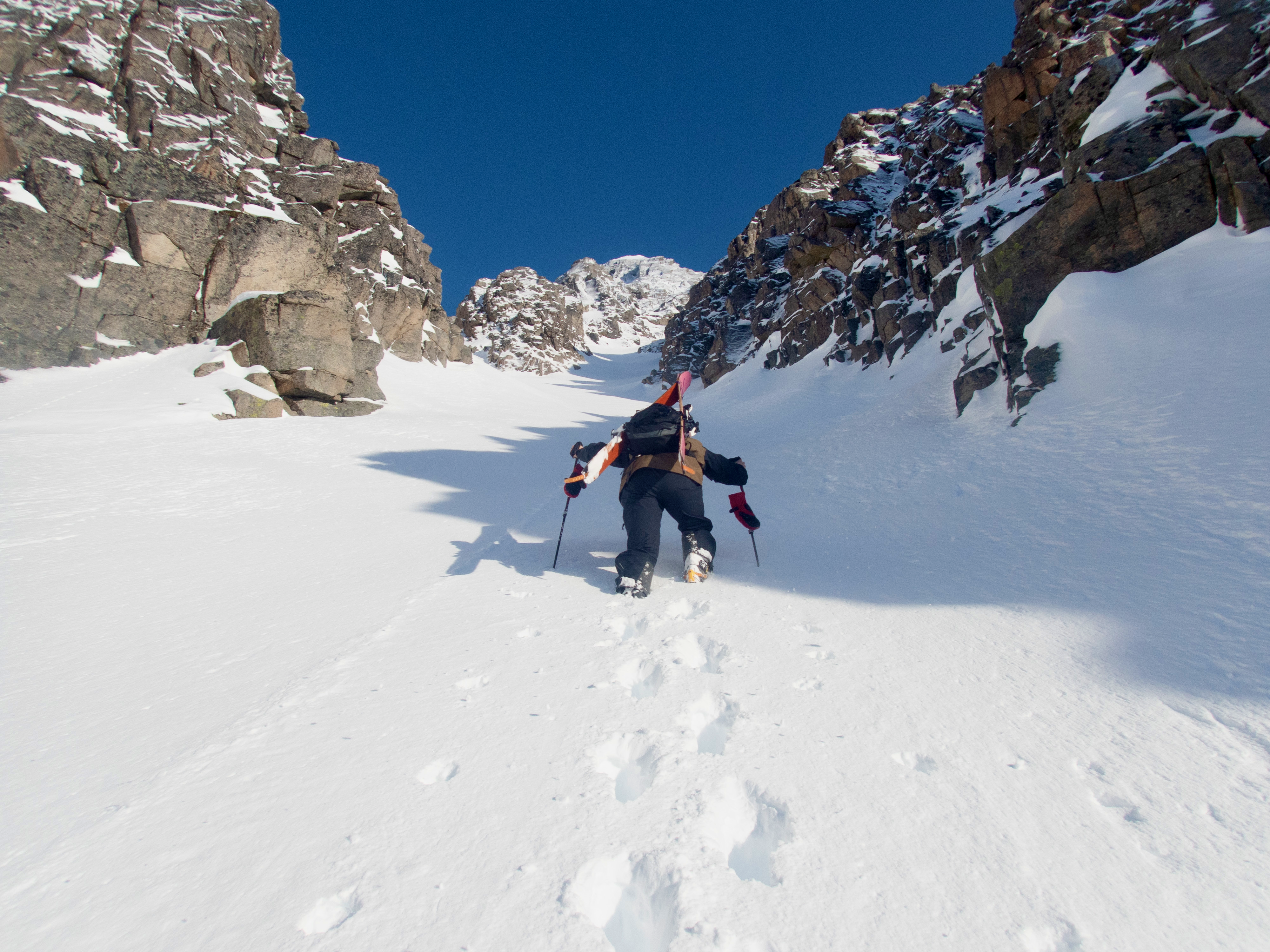
Photo: Tarjei Westerlund
Knowledge lives in the community
If that’s right, the important question isn’t “what should the course cover?” but “where does this competence actually live, and who gets access to it”, and how?
The answer, given over and over by interviewees: mentorship. The knowledge is gained when going out with more experienced, more competent people, building up gradually, progressing from easy days to harder ones, mellow lines to steeper lines, with partners who show you rather than tell you. As one elite athlete put it bluntly: “[Knowledge] doesn’t live in any course, it lives in the mentorship thing, in going out with people who know more. People learn couloirs the way apprentices learn a craft: by participating at the edge of it and moving inward”.
When knowledge relies on mentorship, access to mentors pose the real issue, as access is unevenly distributed. You need a mentor, you need to be brought along, you need (as one rider candidly put it) to “know the right people”. The skier whose father was an avalanche expert had a head start they humbly recognized: it gave them “a foundation, not immunity.” Exactly right. Access doesn’t make you competent, but without it, the participation that does can’t happen.
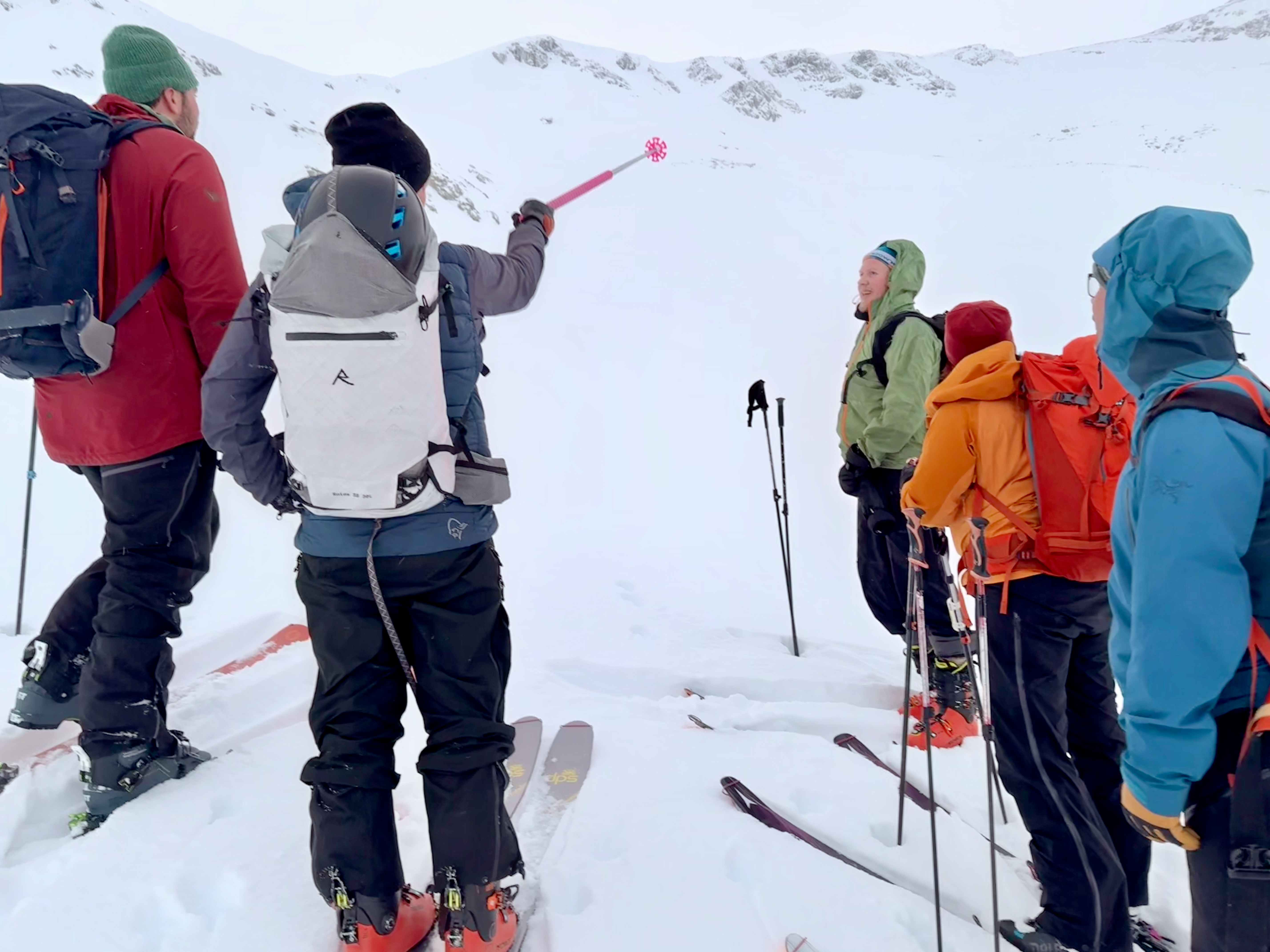
Photo: Tim Dassler
But what if the community is learning/teaching the wrong thing?
Here’s the question that nags at us, and we’ll admit we don’t have a clean answer – yet. If competence grows by participating, by engaging, partaking and watching what happens, then what you learn is only as good as the feedback you get. And couloir skiing may be one of the worst learning environments imaginable in terms of feedback.
Think about what the mountain actually tells you. You make a string of decisions, ski the line, reach the bottom, and nothing bad happens. What did you learn? That you read it right, or that you got away with something? Often these are indistinguishable. The feedback is delayed, rare, and brutally noisy: people survive genuinely bad calls all the time, and now and then a careful, reasonable person dies. One veteran said with disarming honesty: “after a good season you think you’re extremely good, when really you just had luck.” Outcomes don’t track decisions. So, experience can quietly teach the wrong lesson and feel exactly like wisdom while it does.
And if it can happen to one person, why not to a whole community? A group can converge over years on a way of doing things that has mostly worked, and mistake “mostly worked” for “sound,” when really it’s a habit that hasn’t been punished yet. The practices pass down through the very mentorship that makes the knowledge vividly exist, meaning that the blind spots pass down too – with the same authority as the parts that are genuinely hard-won. We don’t raise this to wag a finger at steep riders; it’s no failing peculiar to them or their communities. It’s what happens to any group learning a craft when the teacher is an environment that’s sometimes kind, sometimes ambiguous, sometimes wicked – and always complex and dynamic. The honest response isn’t to pretend we’ve escaped it, but to stay a little suspicious of our own success; to ask, on the good days too, whether we did it well or if we just were lucky.
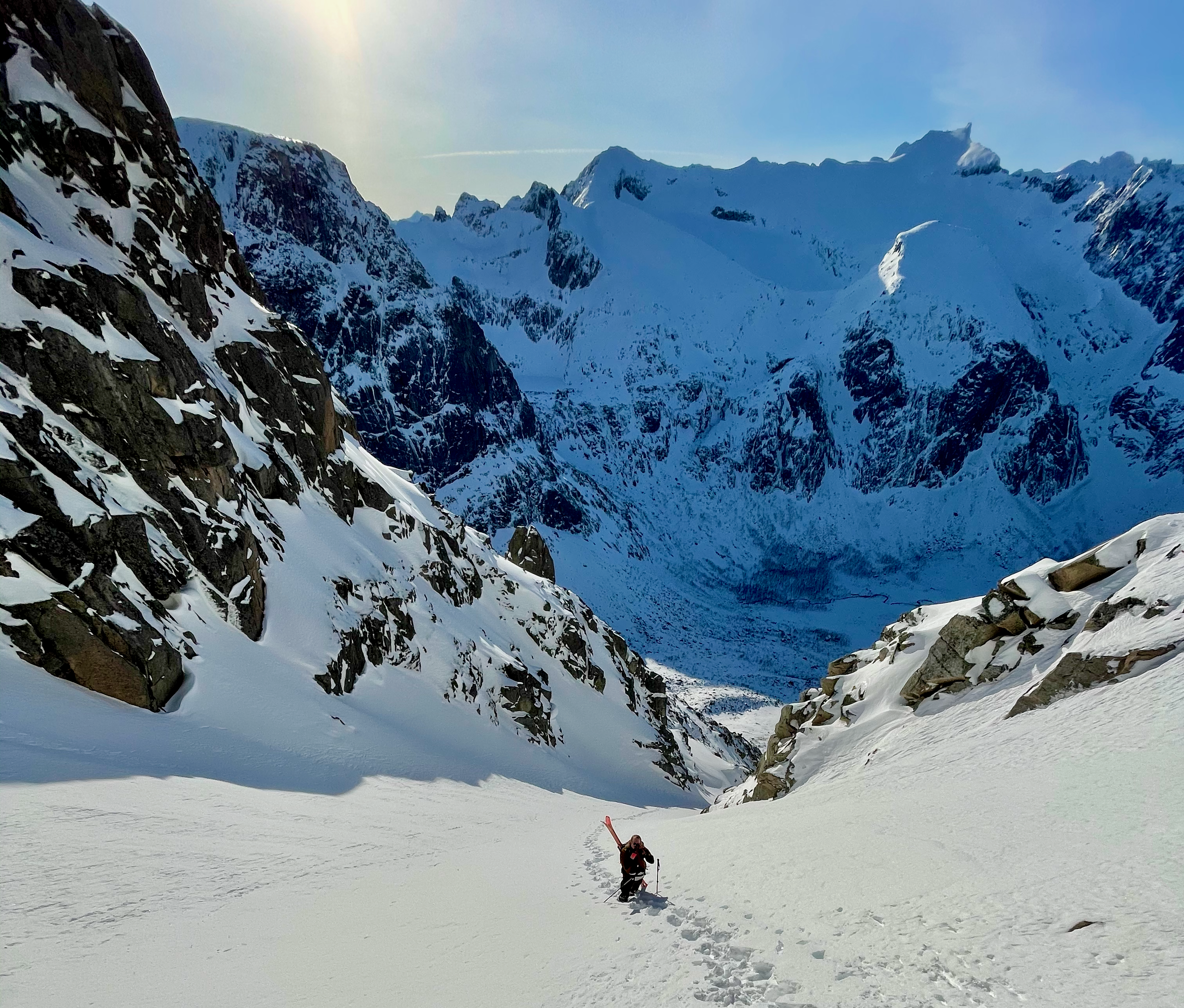
Photo: Tarjei Westerlund
What this means in practice
If competence is grown through participation rather than delivered as content, the path forward isn’t more theory; it’s building the conditions for participation. A few concrete implications follow.
There’s a missing rung on the ladder. In most places, recreational avalanche education stops at level 2, and the next step is going pro. There is nothing in between for the keen skier who wants to keep learning. That gap is fixable: longer and more tailored apprenticeship-style formats; courses aimed at steep skiing rather than at avoiding it; workshops where learners apply their knowledge under guidance and with feedback. Encouragingly, such options are appearing. One participant took such a course this season and stated how they wished there were more.
You can also practice the feeling of couloir riding before the consequences are real. Several practitioners pointed to “micro-terrain”; small(er), low-stakes features where you can rehearse steepness and exposure with the stakes turned down – where you are allowed to fail and able to learn from it. Then gradually ramp up.
In communicating, we need to reach people through their own. Generic safety messaging bounces off this community; what lands comes from a trusted figure already inside it. The respected skiers are the ones who can move the culture, and the respected skiers are the ones we need to communicate through.
Make learning part of your own practice
One more thing, less a fix than a habit, and honestly one that doesn’t solve the feedback problem so much as to refuse to let it win quietly. Make the debrief part of the practice and debrief the good days too. Several practitioners already do some version: a post-tour review, a running “mountain journal” of what went well and what they’d change. It can’t manufacture the feedback the mountain withholds, but it does the one thing available; it forces the luck-or-skill question into the open (did we do that well, or just get away with it?) instead of letting a clean run stand as proof. Done together, out loud, it’s also how a group keeps their blind spots from hardening into cemented structures. It works because it’s a participation habit, not another procedure to file away.
None of this replaces the avalanche course. Take the course and keep taking them; the knowledge is perishable, and even experienced people forget the basics. But take it for what it is: the foundation, not the building. The practice is learned in the field, with people who know more than you, and on a mountain that won’t always tell you the truth about how you’re doing. That’s why the scepticism must come from us, and maybe it is here that avalanche education and mentorship matter most: in providing that reflective stance, the capacity to identify the discrepancy between what you think you can do and what you actually do. If we want couloir travel done in a safer way, by more people, and without taking all the fun out of it, maybe that is where to put the effort?
Based on an interview study of 24 experienced steep couloir practitioners, analyzed with systematic text condensation and read through Lave and Wenger’s theory of situated learning and communities of practice


Leave a comment